
Custom Composite Decks | Deck Builders Waterville
Composite decks in the Waterville area last only as long as the frame under them, so ours start with footings 4 feet down and joists spaced for the board you choose, PVC or capped composite. Before a board is picked, we walk the yard, study the house wall the deck will meet and check any old deck, and the price for each part goes on paper.
- (207) 679-0381
- 143 Silver St, 2nd Floor, Waterville
- [email protected]
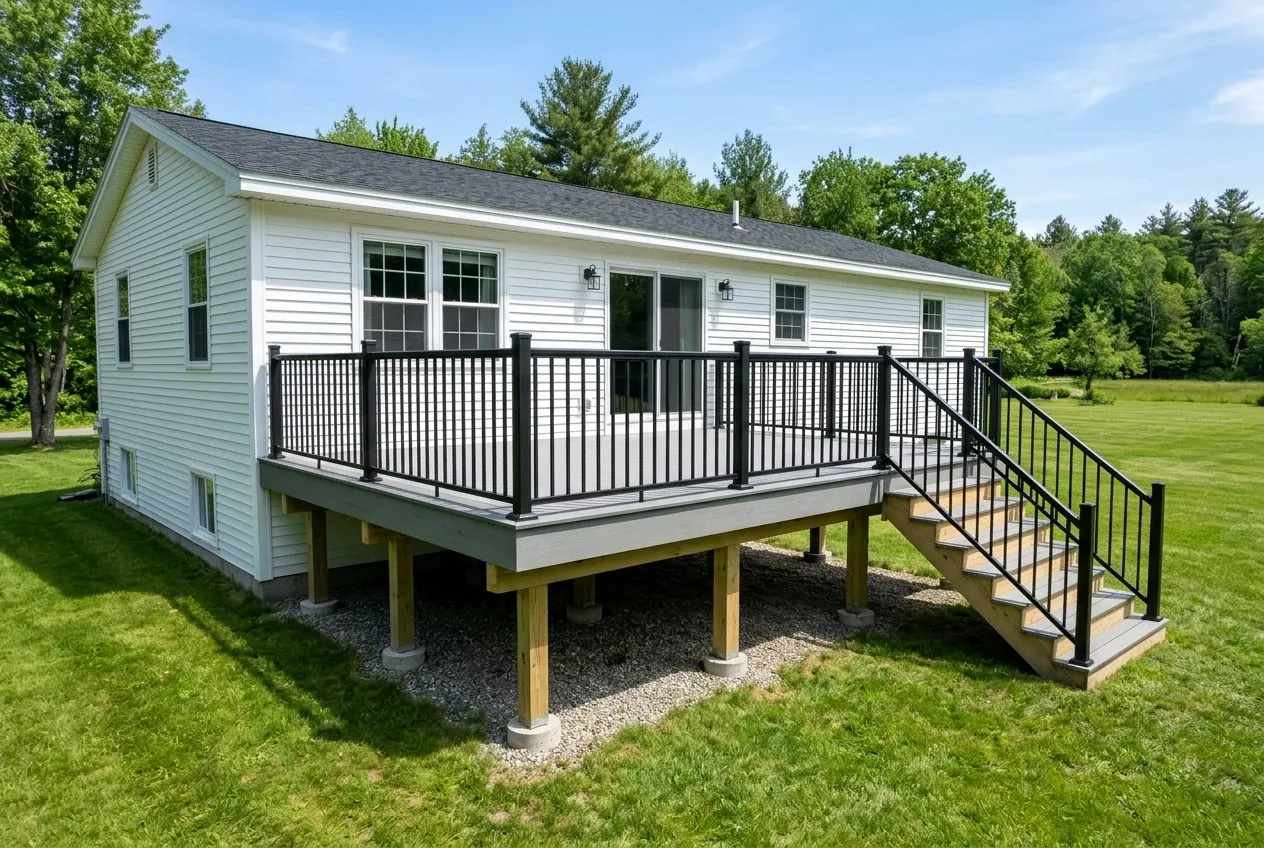
- Decks only, footings to rail
- Free estimate requests
- 22 central Maine towns, Waterville to Skowhegan
- Joists 12 inches apart under every PVC deck
- Tape on each joist before a board goes down
- Trim so no cut board end shows
This page explains how Deck Builders Waterville builds composite decks on houses around Waterville and the 21 towns near it, from the footings and the frame up to the boards, the trim and the rail.
It is for owners trading a splintering wood deck for something better, or building new, who want a surface that never needs stain. What sets the work apart sits under the boards: footings 4 feet down, joists 12 inches apart under PVC, tape on every joist and no composite laid over an old frame.
The figure to keep: a full composite or PVC build with composite rail starts at $15,000, averaged across many quotes. Larger or more complex layouts average $100 to $120 per square foot.
Why Does the Frame Matter More Than the Composite Board?
The frame matters more than the composite board because a board is only as flat and solid as the joists, beam and footings holding it up. A board maker's warranty is written for its boards, not the wood under them, and TimberTech's PVC warranty adds that it will not pay labor or removal costs on a claim.
- Joists 16 inches apart, 12 under PVC
- Joist tape over the top of every joist
- Footings 4 feet down, mostly on helical piles
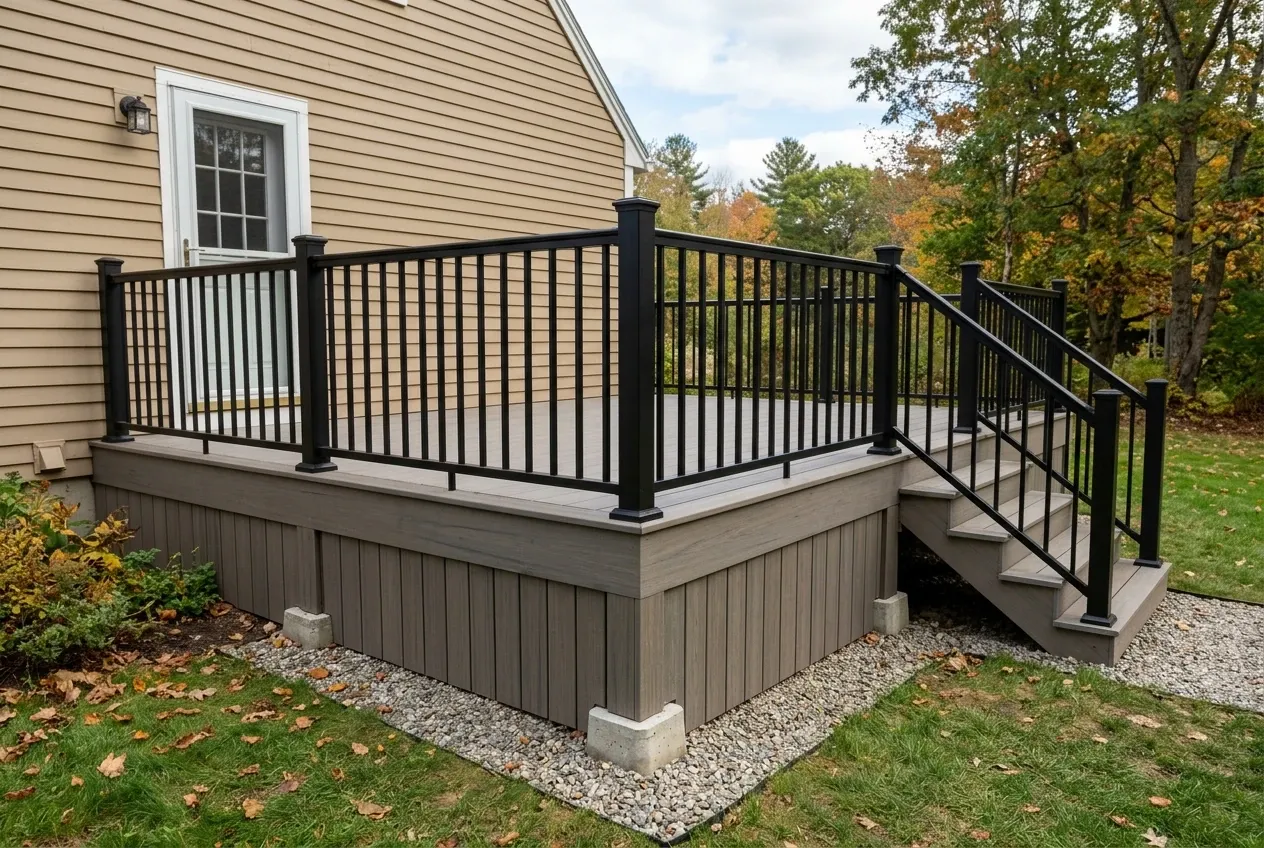
Which Other Deck Jobs Do We Take On?
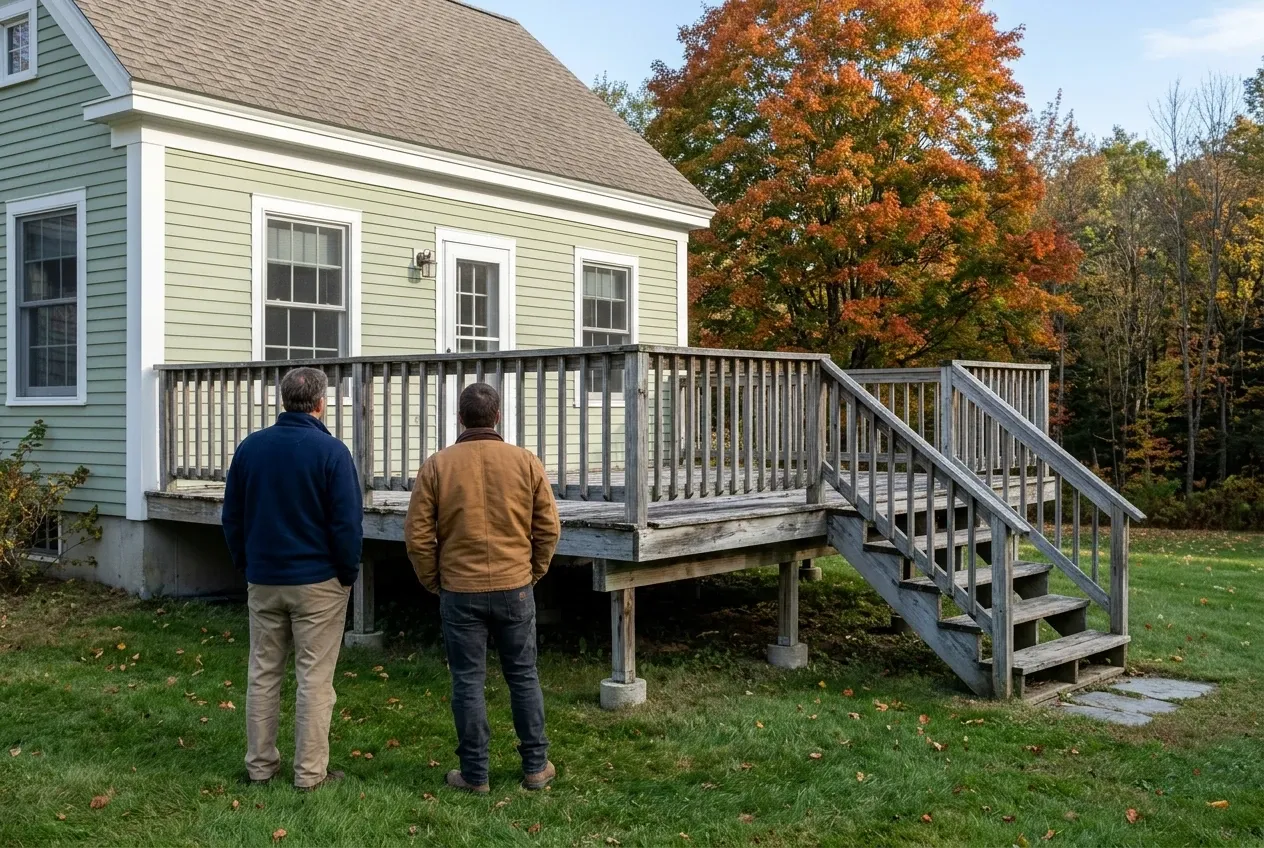 Pressure-Treated DecksThe most affordable deck, framed and decked in treated lumber.See Pressure-Treated Decks
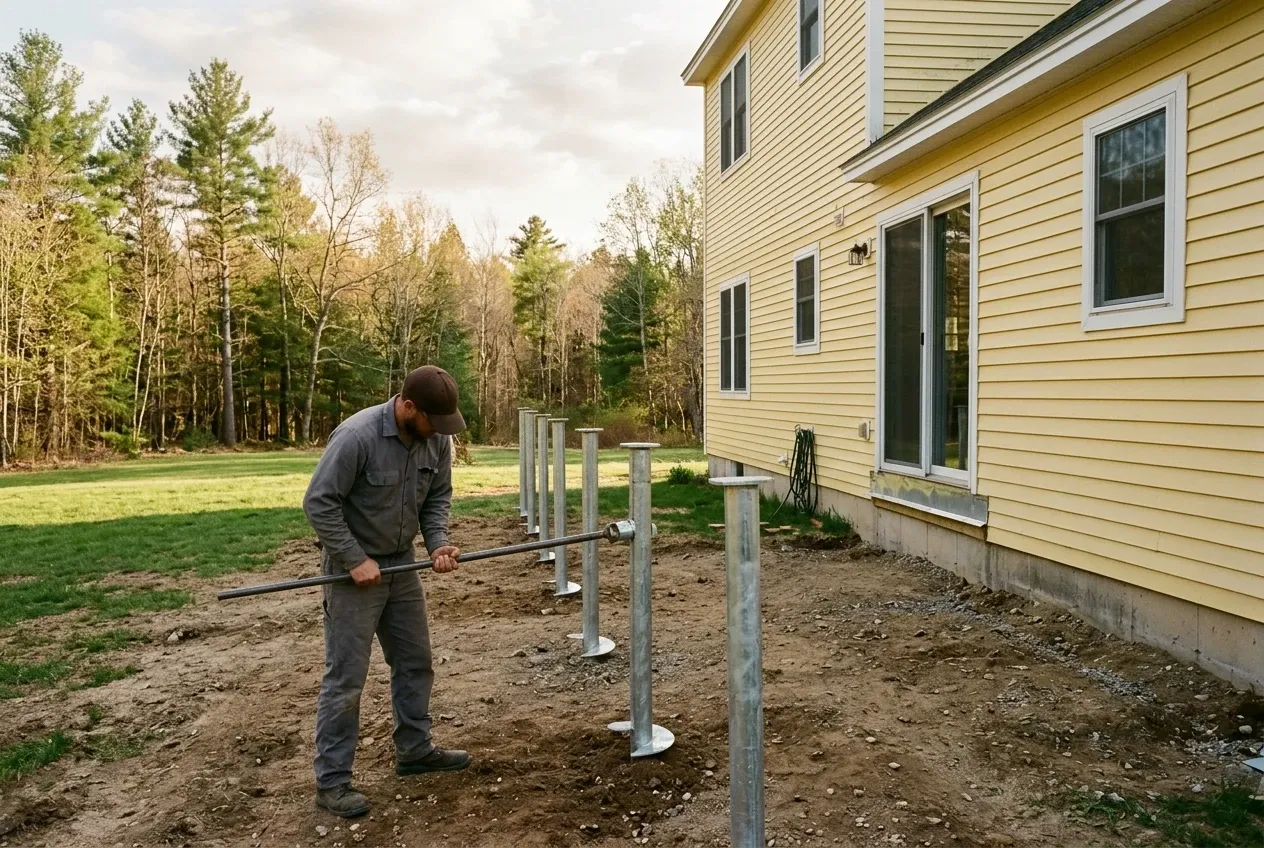 Deck ReplacementThe old deck torn out to the footings, then a new frame, never new boards on a tired frame.See Deck Replacement
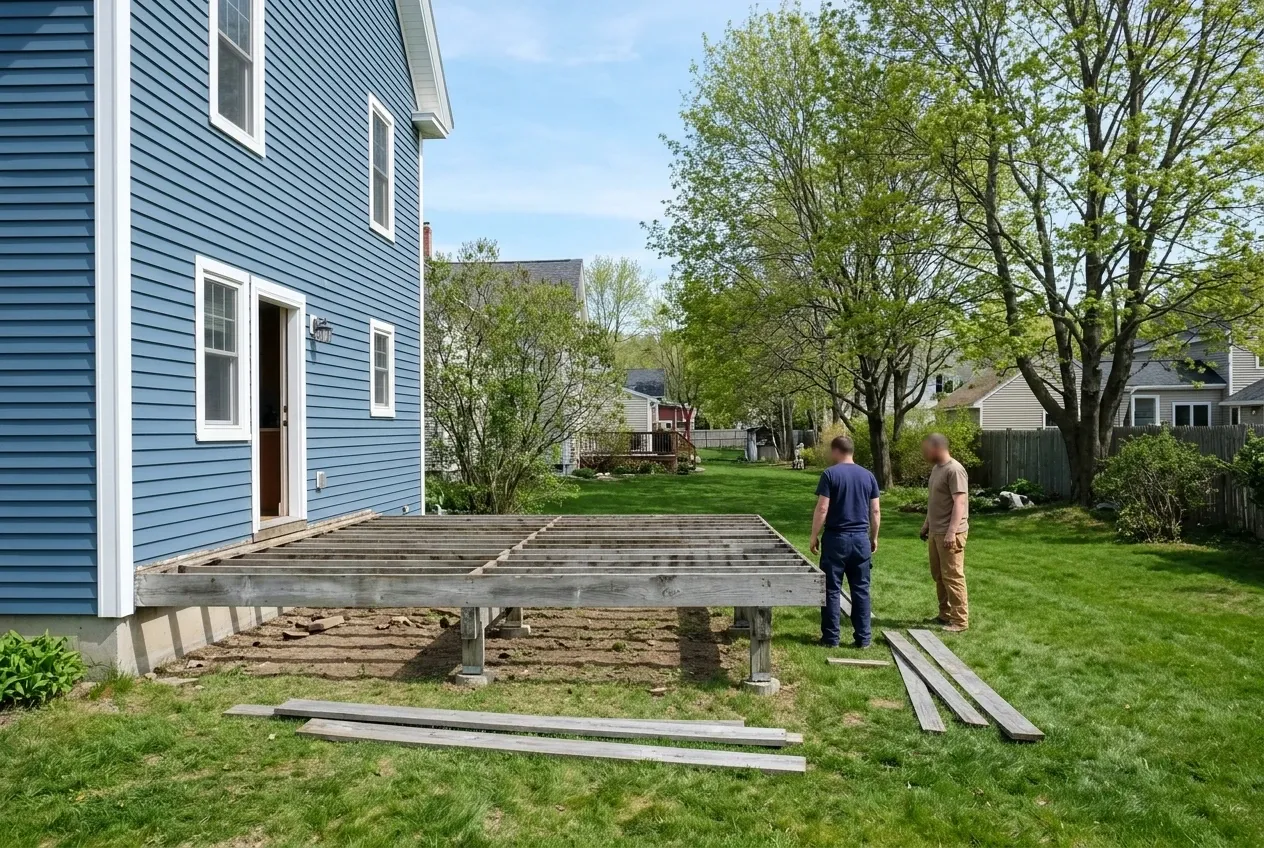 Deck Builders in Waterville, MESee Deck Builders in Waterville, ME
Where Around Waterville Do We Build in Composite?
- OaklandME4 mi from Waterville
- WinslowME4 mi from Waterville
- FairfieldME7 mi from Waterville
- BentonME8 mi from Waterville
- VassalboroME8 mi from Waterville
- SidneyME9 mi from Waterville
- BelgradeME9 mi from Waterville
- SmithfieldME10 mi from Waterville
- ClintonME10 mi from Waterville
- AlbionME11 mi from Waterville
- ChinaME11 mi from Waterville
- RomeME12 mi from Waterville
- MercerME14 mi from Waterville
- UnityME15 mi from Waterville
- AugustaME15 mi from Waterville
- NorridgewockME15 mi from Waterville
- PalermoME15 mi from Waterville
- SkowheganME15 mi from Waterville
- Mt. VernonME16 mi from Waterville
- FreedomME16 mi from Waterville
- BurnhamME16 mi from Waterville
What Should You Settle Before Ordering Composite Boards?
Three things decide how a composite deck holds up: the board itself, the frame it sits on, and the way it is fastened and trimmed.
Composite, Capped Composite or PVC in Maine Weather
TimberTech defines composite as polymers mixed with organic wood fibers, and its own composite boards wrap that core in a three- or four-sided polymer cap, the four-sided kind being what it calls "the most protective." PVC, in TimberTech's words, is polyvinyl chloride with no organic material such as wood pulp, and Deckorators says its Surestone line replaces the wood fiber with minerals.
Central Maine asks a lot of a deck board, from July sun on a south wall to snow that sits on it all winter. TimberTech says darker colors feel hotter, and that PVC heats faster while composite gets hotter overall.
Our usual pick is a PVC board or a composite with a four-sided cap, in a lighter color where the deck faces the afternoon sun. Clear it with a plastic shovel in winter, because Trex warns that metal shovels and sharp tools can damage its boards and void the warranty.
The Frame Under Composite: Spacing and Joist Tape
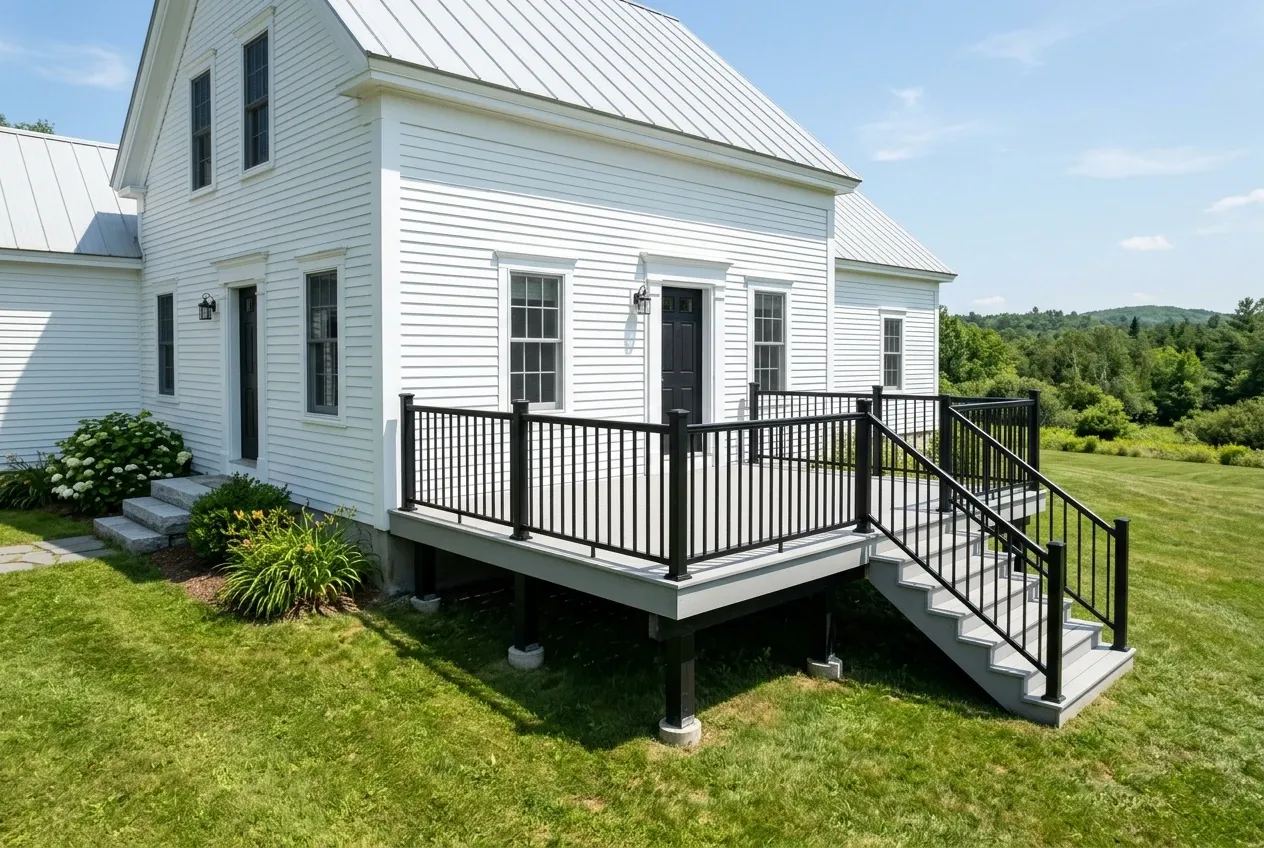
A composite deck that feels bouncy underfoot usually has its joists, the parallel boards the decking is fastened to, set too far apart for the board on top. TimberTech says residential joists should never exceed 16 inches on center for standard boards and 12 inches for boards run on a diagonal, and under PVC we tighten every deck to 12 inches whichever way the boards run.
Every joist gets joist tape, a self-sticking strip laid along its top edge that seals around each screw, and we size the frame heavier than the minimum, with rows of solid blocking between joists every 4 to 6 feet as TimberTech calls for. The frame is the least costly part of a deck, so cutting corners on it under composite boards saves little and risks the whole deck.
Where the deck meets the house, the ledger (a board bolted along the wall to hold up the deck's near side) gets flashing, a metal or membrane shield that DCA 6, the American Wood Council's construction guide, requires at any ledger on a wood-framed wall. If the wall cannot take a ledger, we build freestanding, with the deck standing on its own posts.
Gaps, Hidden Clips and Trim on a Composite Deck
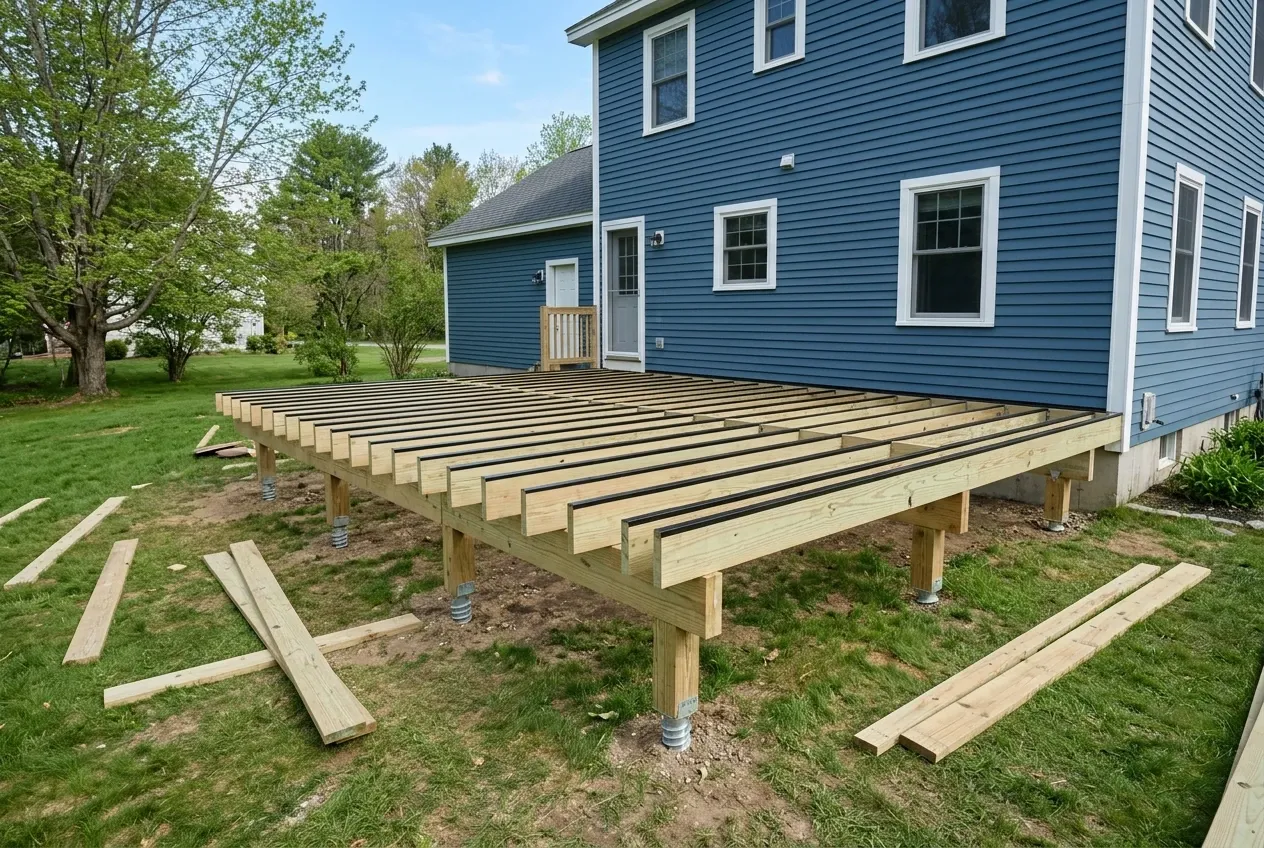
Composite and PVC boards need gaps set by the air temperature on install day: TimberTech wants a 3/16 inch end gap on its composite when the air is at or below freezing, and 1/8 inch when the thermometer reads 33 to 74 degrees F. TimberTech and Trex both exclude "improper gapping" from their warranties, so we set each gap by the thermometer rather than by habit.
Most boards go down on hidden fasteners, clips that grip the grooved edge of each board so no screw head shows. PVC is the exception because PVC moves, so on a PVC deck we screw through the face and cover each screw head with a matching plug.
Around the edges we picture-frame the deck with a border board so no cut end shows, then close in the rim (the outer joist that boxes in the frame) with fascia and the skirting below in the same material rather than lattice. Deckorators' Surestone installation guide calls for stair stringers (the notched boards that carry the steps) no more than 9 inches apart under its treads.
What Composite Deck Services Do We Offer?
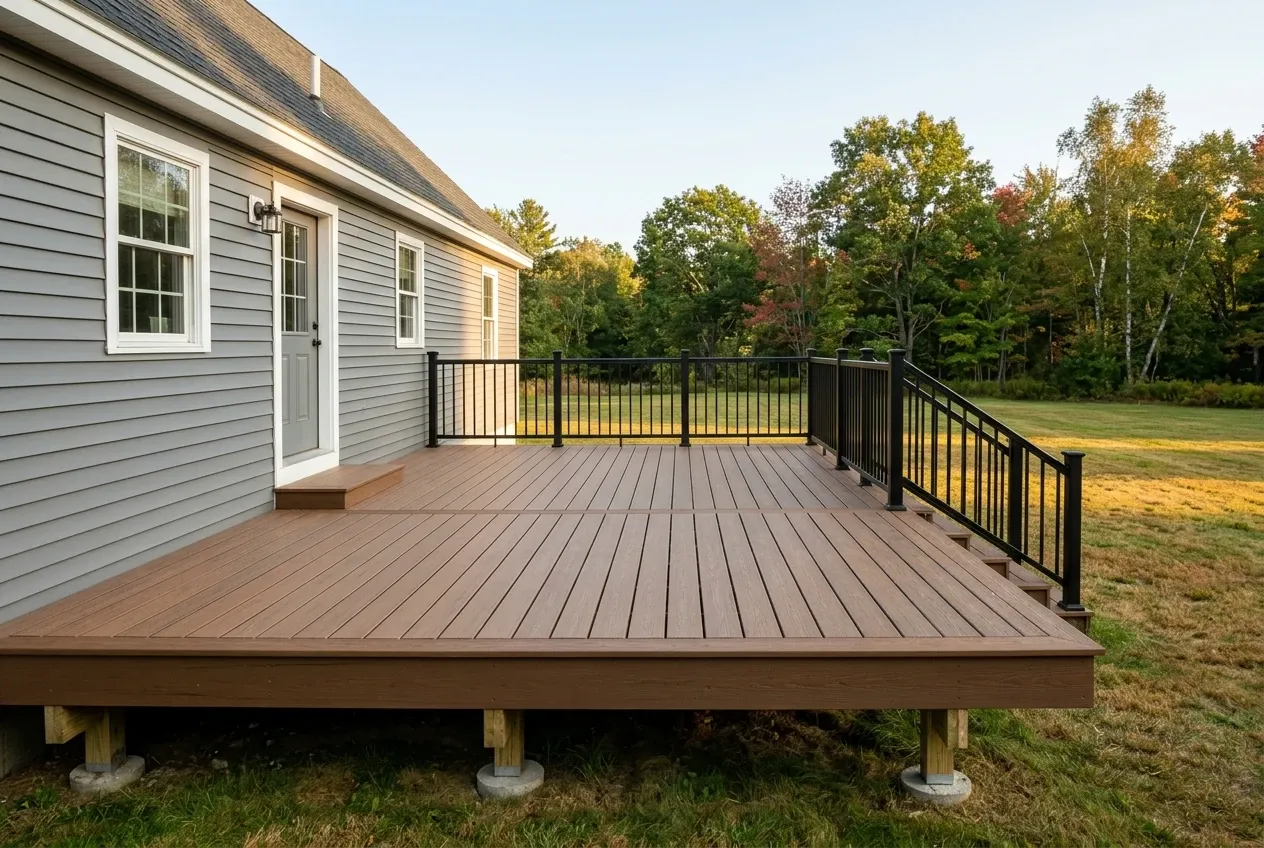
Each composite job runs from the footings to the last rail cap under one written price.
TimberTech posts its guides, one of them for its flashing and joist tape, on its installation help page. We build every deck to the guide for the exact board going on it, fasteners included.
- Footings, posts and a frame sized for composite
- Capped composite or PVC boards, clipped or plugged
- Stairs, fascia and rail matched to the boards
How to Go From Bare Yard to a Composite Deck
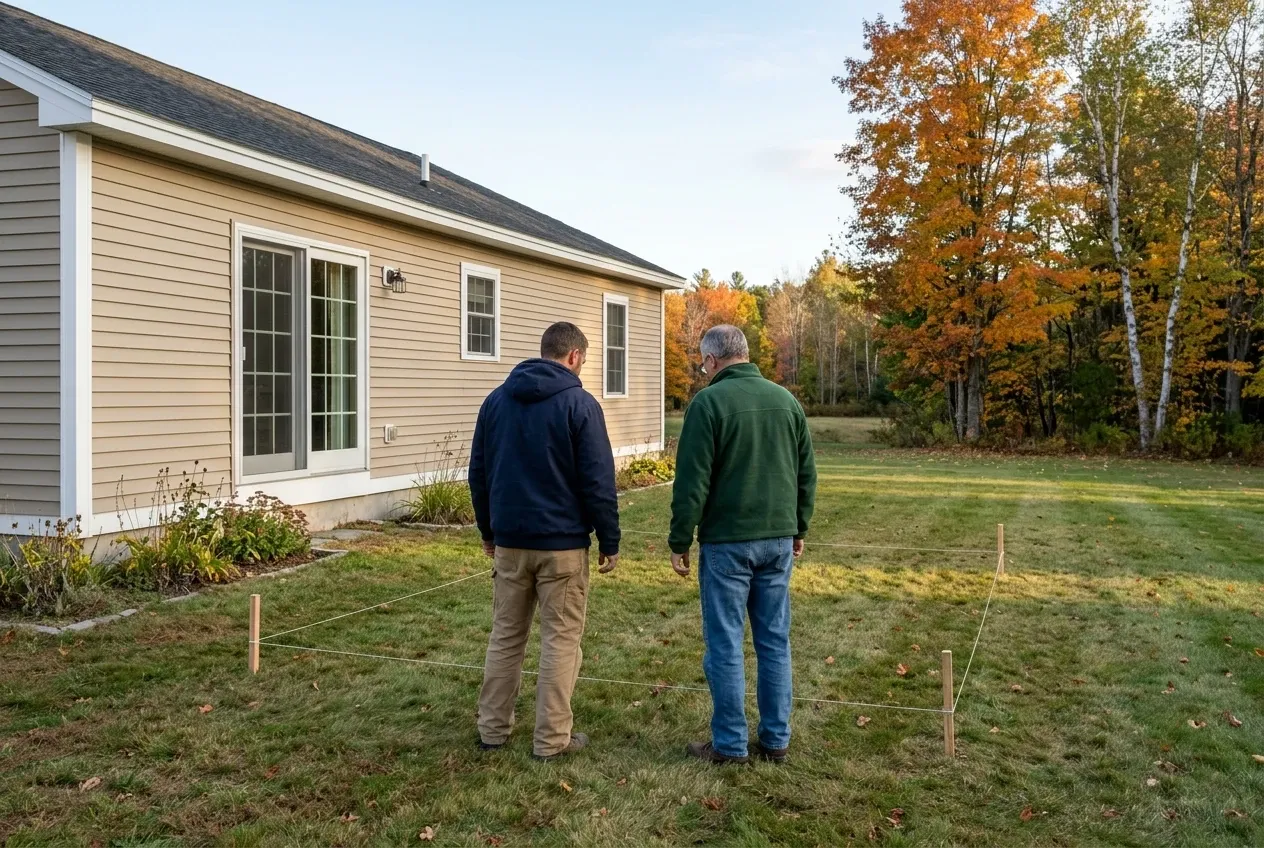
We read the ground and the house first.
We walk the yard and check the slope and soil at each footing spot (a footing is the buried base of concrete or steel under a post), then look at the siding the deck will fasten to and go over any old deck. Then we tell you PVC or capped composite, a ledger or a freestanding frame, and why.
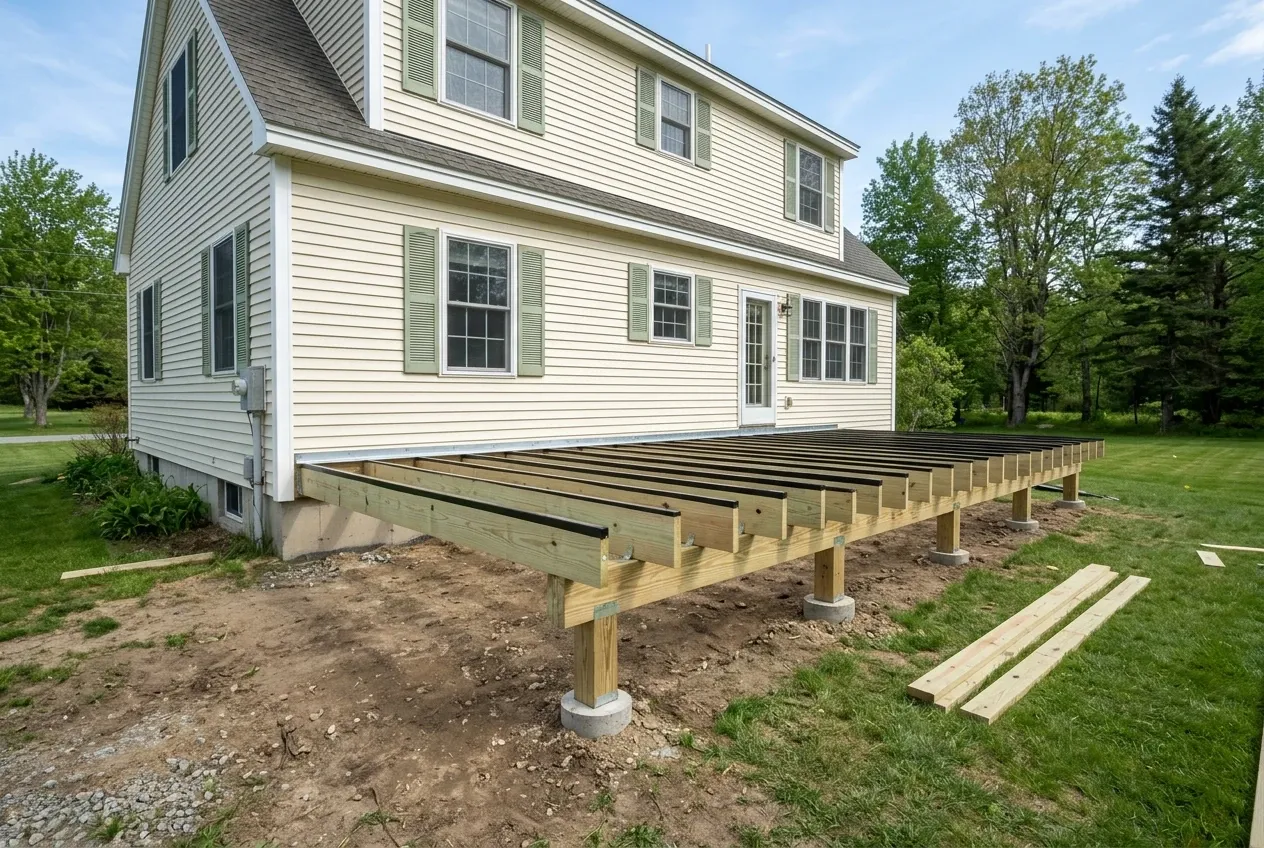
A written price, a signed contract, a capped deposit.
Footings, frame, boards, rail and stairs each get their own line on the written price. Once the price passes $3,000, Maine law (10 MRSA §1487) puts the whole deal on paper with both signatures on it, and we never take over one third of the price before work begins. Where the town wants a permit, we pull it before anyone digs.
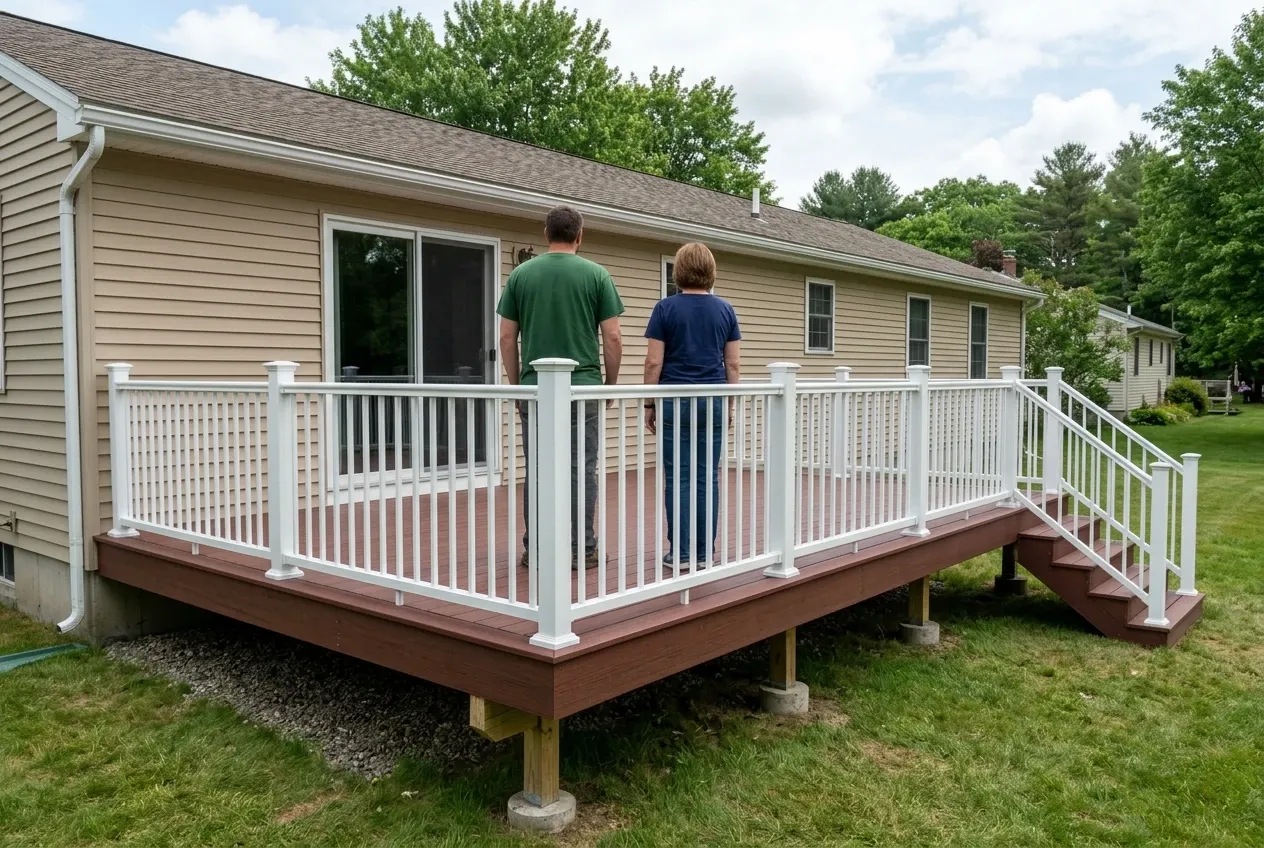
The frame goes in first and the boards last.
Any old deck is torn out and hauled away, helical piles (steel shafts turned down into the soil) go in on most jobs, and then come the posts, the beam and the taped frame. The boards, fascia, rail and stairs go on last, and at the end we walk across the finished deck with you.
When Are Composite Decks Worth the Higher Price?
Composite decks are worth the higher price on a house you plan to stay in, for an owner who would rather wash a deck than stain one. The extra money buys boards that never see a sealer.
They are the wrong buy when the budget only reaches the $15,000 floor by cutting the frame, or when the deck may come off within a few years for an addition. For a small landing at a back door, our pressure-treated decks page is the better place to start.
Composite also asks for a careful color choice, because TimberTech does not recommend painting or staining its boards, and Trex treats any paint or coating as voiding its warranty. Deckorators recommends buying all of a deck's boards at once, since color can differ between production runs.
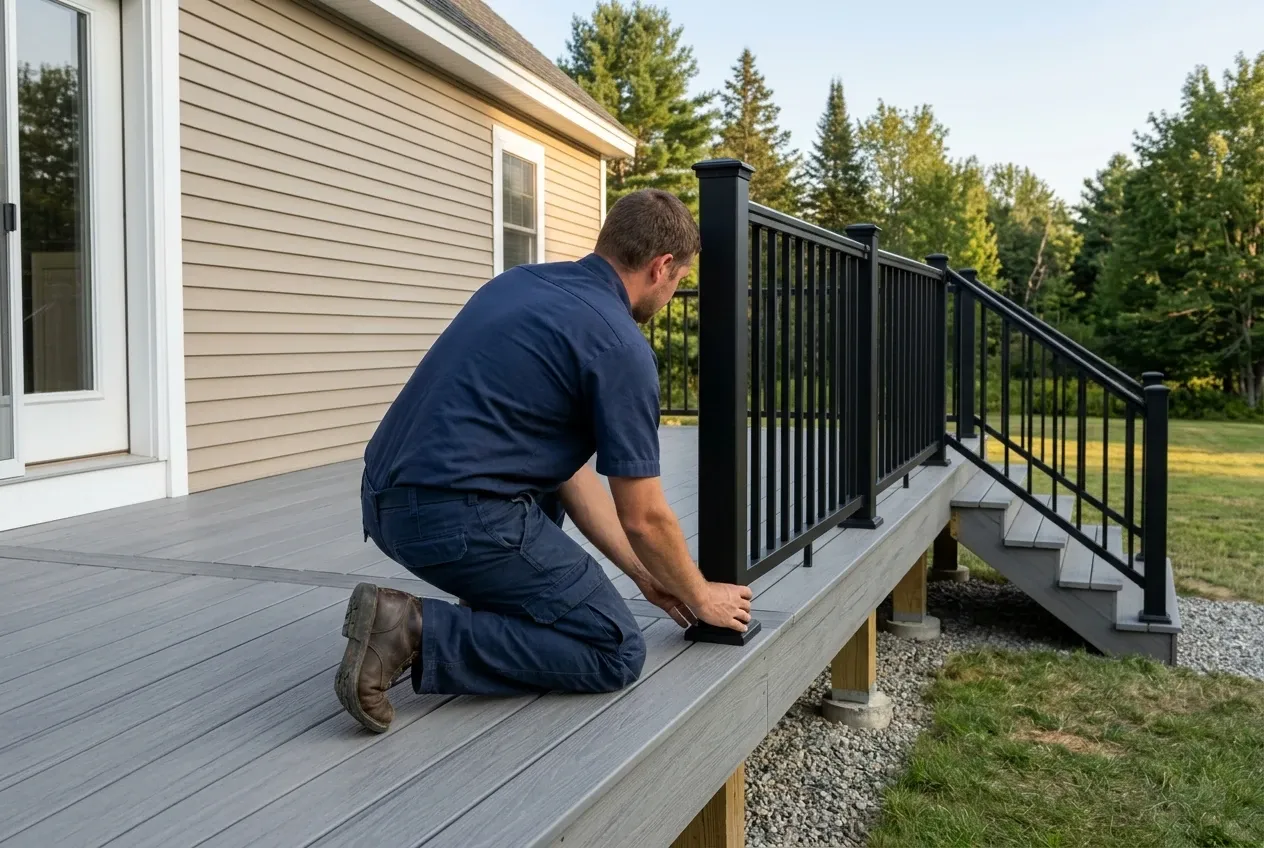
Who Should Build in Composite, Where, and When?
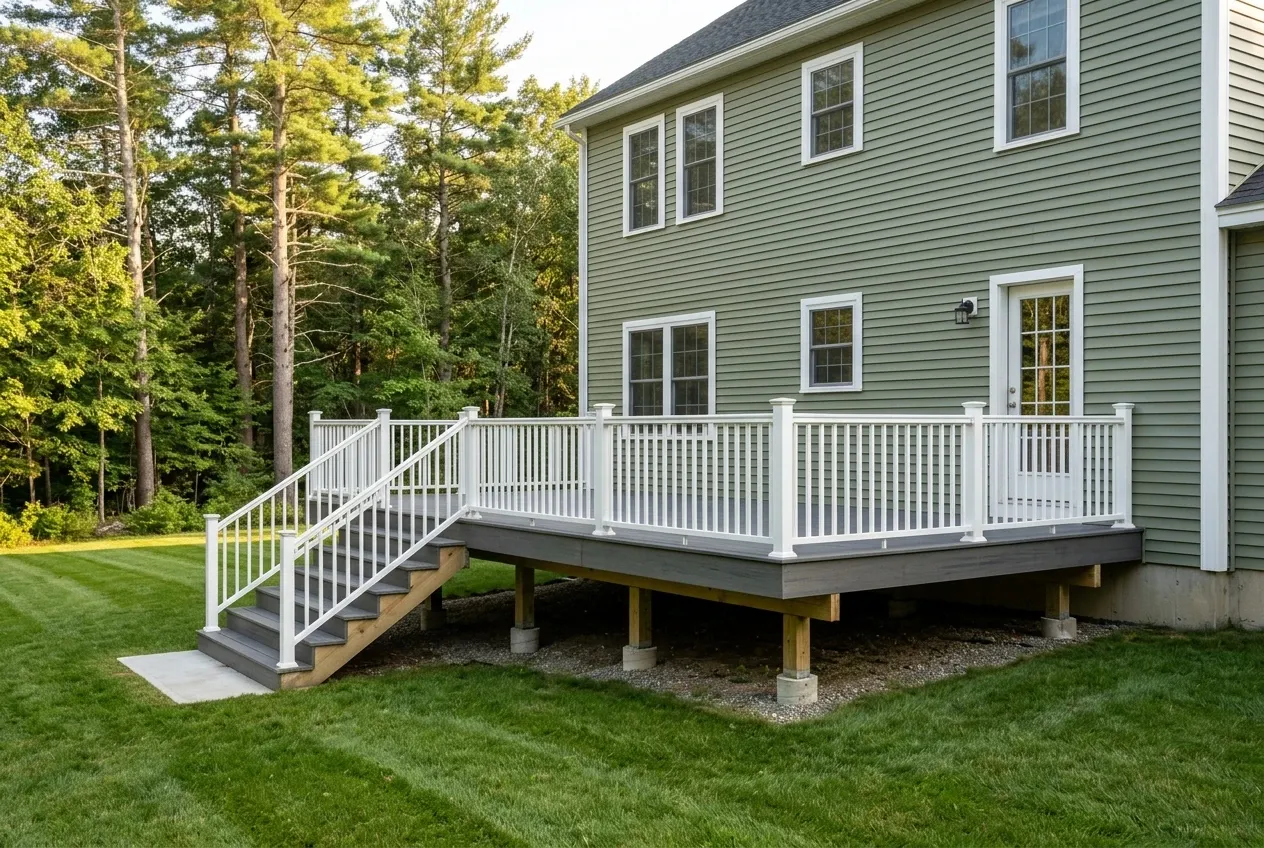
Who is a composite deck the right fit for?
The people a composite deck suits most are owners staying put for the long run, above all those whose wood boards have started to splinter. They give up sealing and staining for good.
Where on a house does a composite deck need the most thought?
A composite deck needs the most thought on a damp, shaded side and on a south or west face in full sun. Deckorators says mold and mildew grow on any surface in wet shade and Trex says every deck needs air circulating beneath it, so a shady deck gets open space underneath.
When in the year can composite boards go down?
Composite boards can go down in any month we can build safely, though the gaps change with the air temperature that day. Trex widens its end gap from 1/8 inch to 3/16 inch below 40 degrees F, while the footings have to be set well ahead of the deep frost.
How Much Does a Composite Deck Cost to Build?
A composite deck costs at least $15,000 to build as a full job with composite or PVC boards and composite rail, a figure averaged across many quotes rather than taken from one yard. Bigger or more complex layouts, with levels, angles or extra stairs, average $100 to $120 per square foot, and most large composite decks land in that band.
| Deck | What it usually means | Average |
|---|---|---|
| Composite or PVC, full build | new footings and frame, composite or PVC boards, composite rail | from $15,000 |
| Bigger or more complex layout | levels, angles, wraparounds, tie-ins, more stairs | $100 to $120 per square foot |
| Composite boards on a tired old frame | new boards screwed down over old joists and footings | we do not build it |
Installed averages across many quotes in the Waterville area, never a quote for your yard, covering footings, frame, boards, rail and stairs. Height, the number of steps and anything an old deck conceals can move the number, and TimberTech, Trex and Deckorators are trademarks of their makers, none of which has any tie to us.
Why is there no composite price per square foot?
There is no composite price per square foot here, because the averages we work from set a floor for a full composite build rather than a per-foot rate, and the board line you pick changes the cost on its own. Size matters less than most people expect: the footings under a small deck cost close to what a larger deck's do, so stretching a 10x10 plan to 12x16 typically adds about $1,000.
What moves a composite deck's price inside the range?
A composite deck's price moves first with a ramp, then with how many stairs it needs, whether usable footings already exist, how complicated the layout gets and the deck's height. Past about 2 feet off the ground, staging eats about one crew day, and that day counts for more on a small deck than a big one, while picture-frame trim adds real cost too.
Should you choose composite or PVC boards?
Choosing between composite and PVC boards comes down to makeup and frame cost: PVC is the wood-free board TimberTech calls ultra lightweight, while capped composite lets the joists sit 16 inches apart instead of our 12. Our lean is PVC for a deck you plan to keep, and capped composite when the budget is tight.
What Does It Take to Get a Composite Deck Priced?
Getting a composite deck priced takes one visit, where we look over the yard, the wall it will meet and any deck already standing, then write the footings, frame, boards and rail as separate lines. The request and the written price cost you nothing.