
Local Pressure Treated Decks | Deck Builders Waterville
Pressure treated decks are the most affordable deck we build, and in central Maine they hold up when the posts carry a ground-contact tag, the joists are taped and the footings sit 4 feet down. Before any price is written, we check the soil where each post will stand and the side of the house the deck will fasten to.
- (207) 679-0381
- 143 Silver St, 2nd Floor, Waterville
- [email protected]
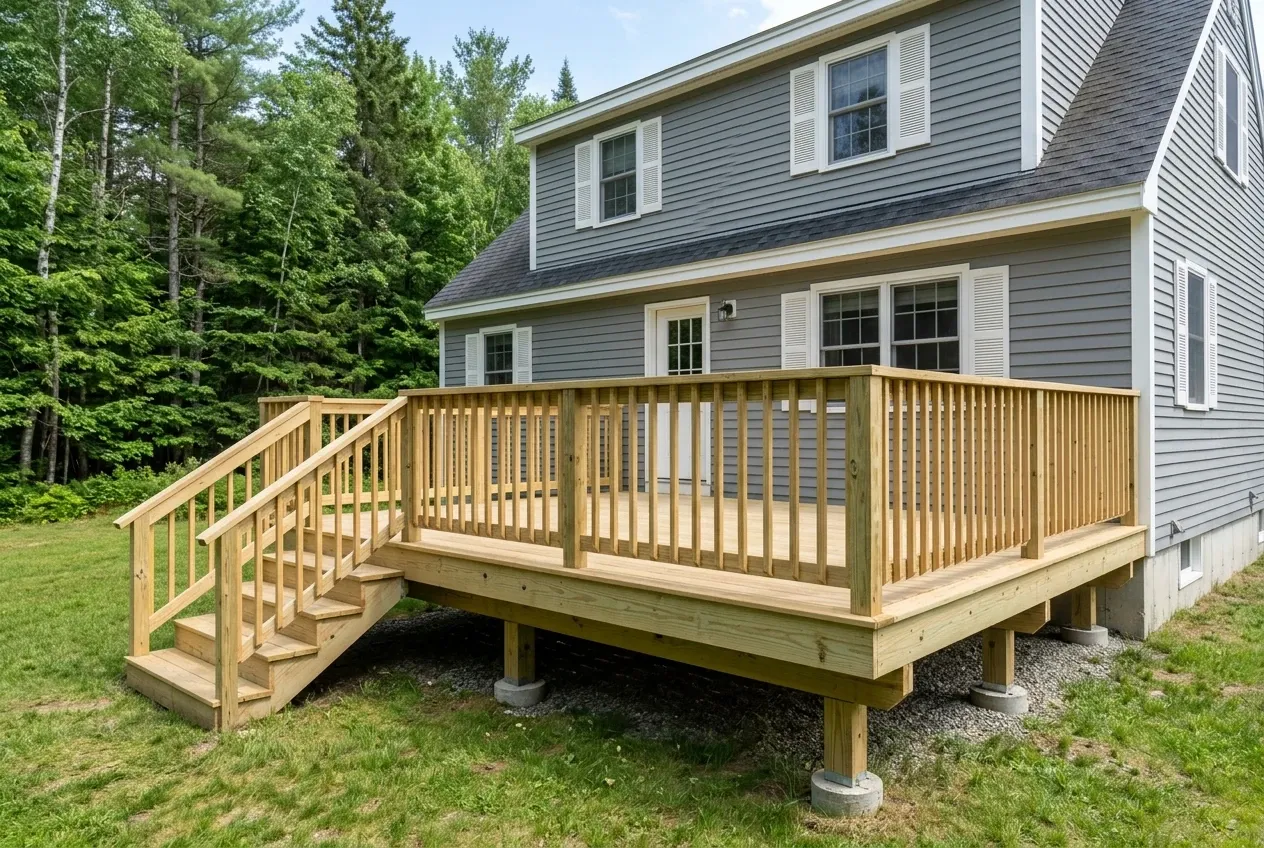
- Decks only, footings to rail
- Free estimate requests
- 22 central Maine towns, Waterville to Skowhegan
- Ground-contact posts on every treated deck
- Cut ends brushed with preservative
- Galvanized or stainless hardware throughout
This page covers how Deck Builders Waterville builds treated wood decks across the Waterville area and its 21 neighboring towns: which lumber goes in which spot, how the first year goes, and when wood is a better buy than composite.
It is written for owners who want a real wood deck at a sensible price. The difference sits under the boards, with ground-contact posts on footings 4 feet down, a flashed ledger, tape on every joist and no deck ever set on blocks.
The figure to keep: a simple treated deck averages about $80 per square foot across many quotes, and a full treated build starts at $10,000.
Why Do Some Treated Decks Rot Long Before Others?
Some treated decks rot long before others because lumber rated only for use above the ground ended up at the soil, the ledger went on with no flashing, or the posts sat on blocks that heaved. None of those faults shows on the day the deck is finished, which is why our time and money go under the boards first.
- Ground-contact posts on every deck we frame
- A flashed ledger, or a frame on its own posts
- Hot-dipped galvanized or stainless hardware
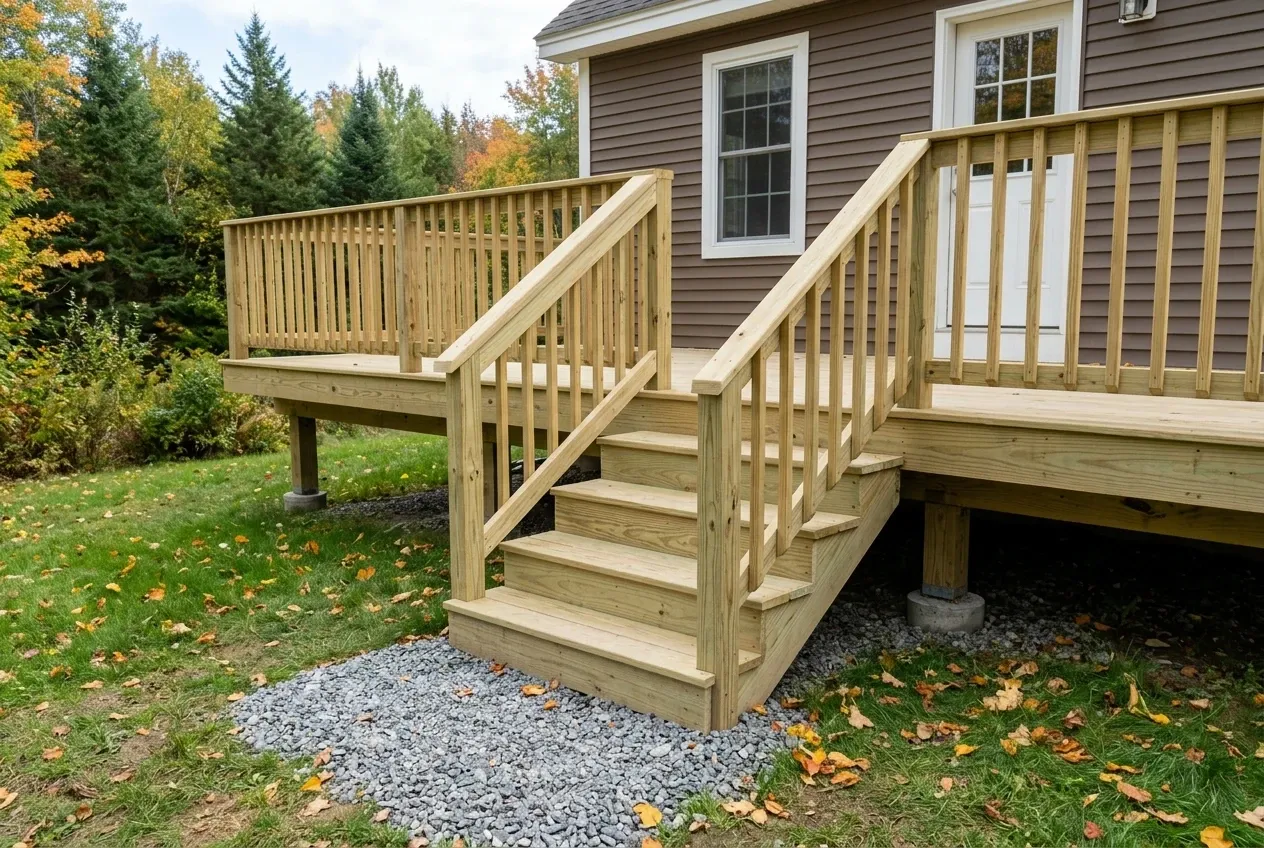
What If Treated Wood Is Not the Right Deck?
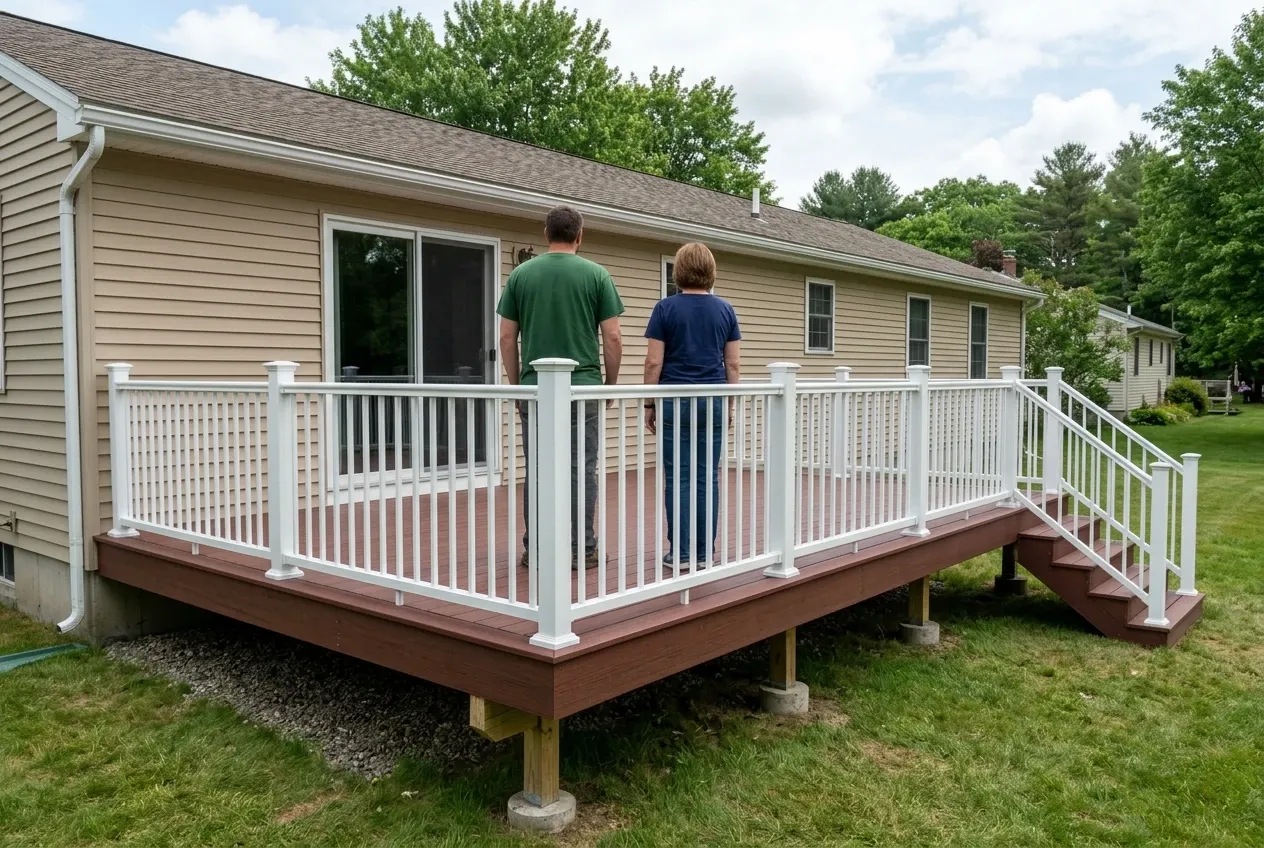 Composite DecksCapped composite or PVC boards over a pressure-treated frame with joists set for the boards.See Composite Decks
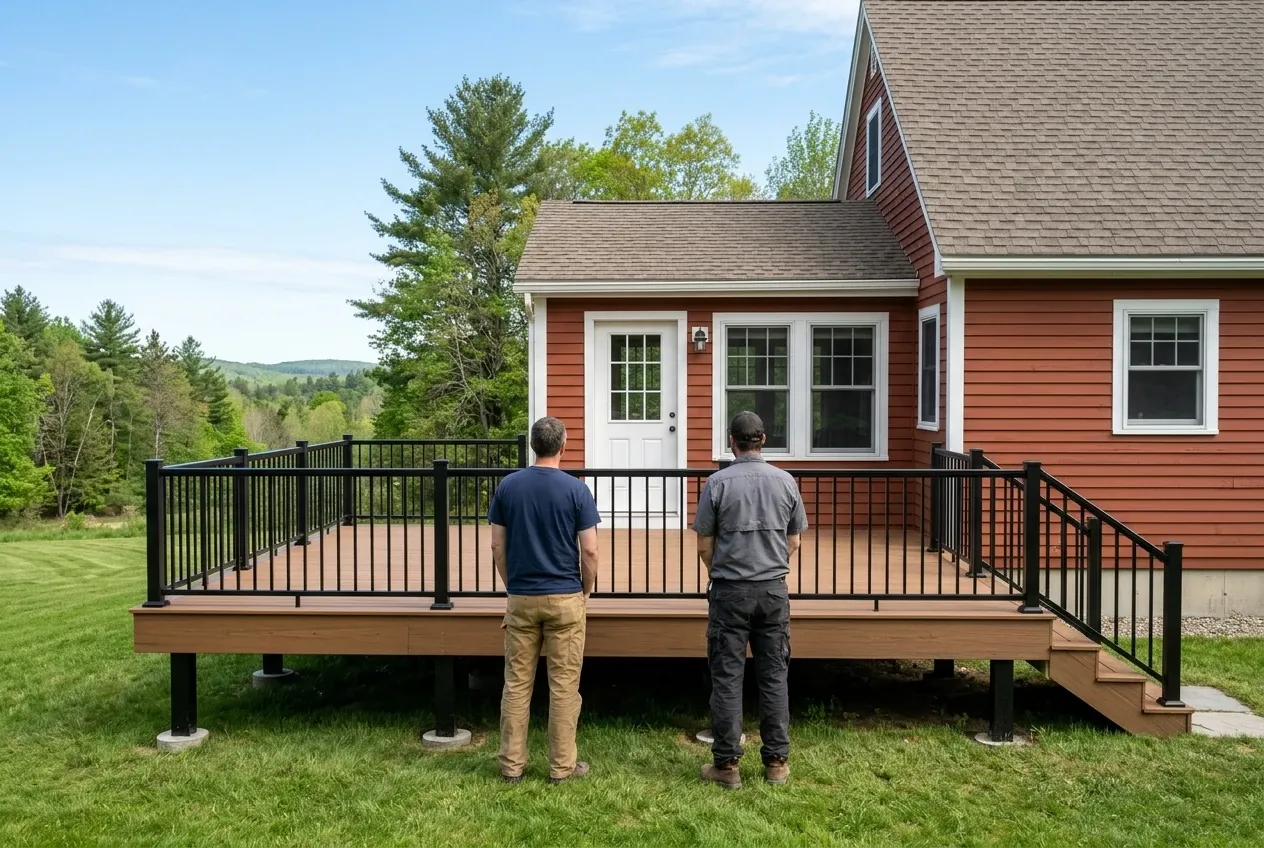 Deck ReplacementThe old deck torn out to the footings, then a new frame, never new boards on a tired frame.See Deck Replacement
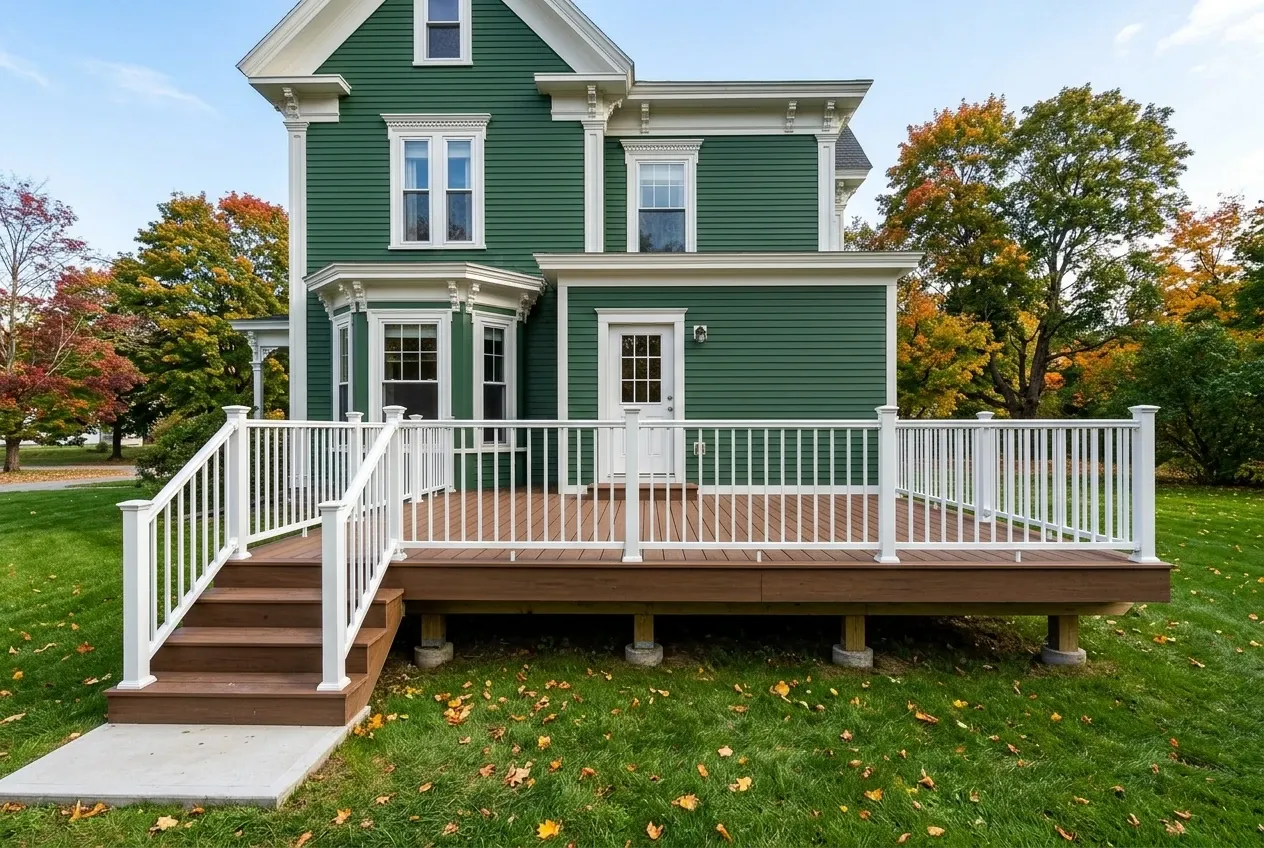 Deck Builders in Waterville, MESee Deck Builders in Waterville, ME
Which Towns Get a Treated Deck From Our Crew?
- OaklandME4 mi from Waterville
- WinslowME4 mi from Waterville
- FairfieldME7 mi from Waterville
- BentonME8 mi from Waterville
- VassalboroME8 mi from Waterville
- SidneyME9 mi from Waterville
- BelgradeME9 mi from Waterville
- SmithfieldME10 mi from Waterville
- ClintonME10 mi from Waterville
- AlbionME11 mi from Waterville
- ChinaME11 mi from Waterville
- RomeME12 mi from Waterville
- MercerME14 mi from Waterville
- UnityME15 mi from Waterville
- AugustaME15 mi from Waterville
- NorridgewockME15 mi from Waterville
- PalermoME15 mi from Waterville
- SkowheganME15 mi from Waterville
- Mt. VernonME16 mi from Waterville
- FreedomME16 mi from Waterville
- BurnhamME16 mi from Waterville
What Makes a Treated Wood Deck Last in Central Maine?
A treated deck lasts when three things line up: the right lumber in the right spot, a careful first year, and a clear reason to pick wood at all.
Reading the Tag: Ground Contact or Above Ground
Each treated board should carry a tag on its end, and the American Wood Protection Association's homeowner guide explains its codes: UC3B means "Exterior Above Ground, Uncoated or Poor Water Runoff" and UC4A means "Ground Contact, General Use." Viance, a maker of wood preservatives, draws the line at six inches: above ground means six inches or more over the soil, and ground contact means in it or six inches or less from it.
AWPA's chart for homeowners lists deck posts as ground contact, UC4A or higher, and deck boards and railing as above ground, UC3B or higher. Its chart puts joists and beams in both columns, with a note that framing which is hard to replace may call for the ground-contact rating.
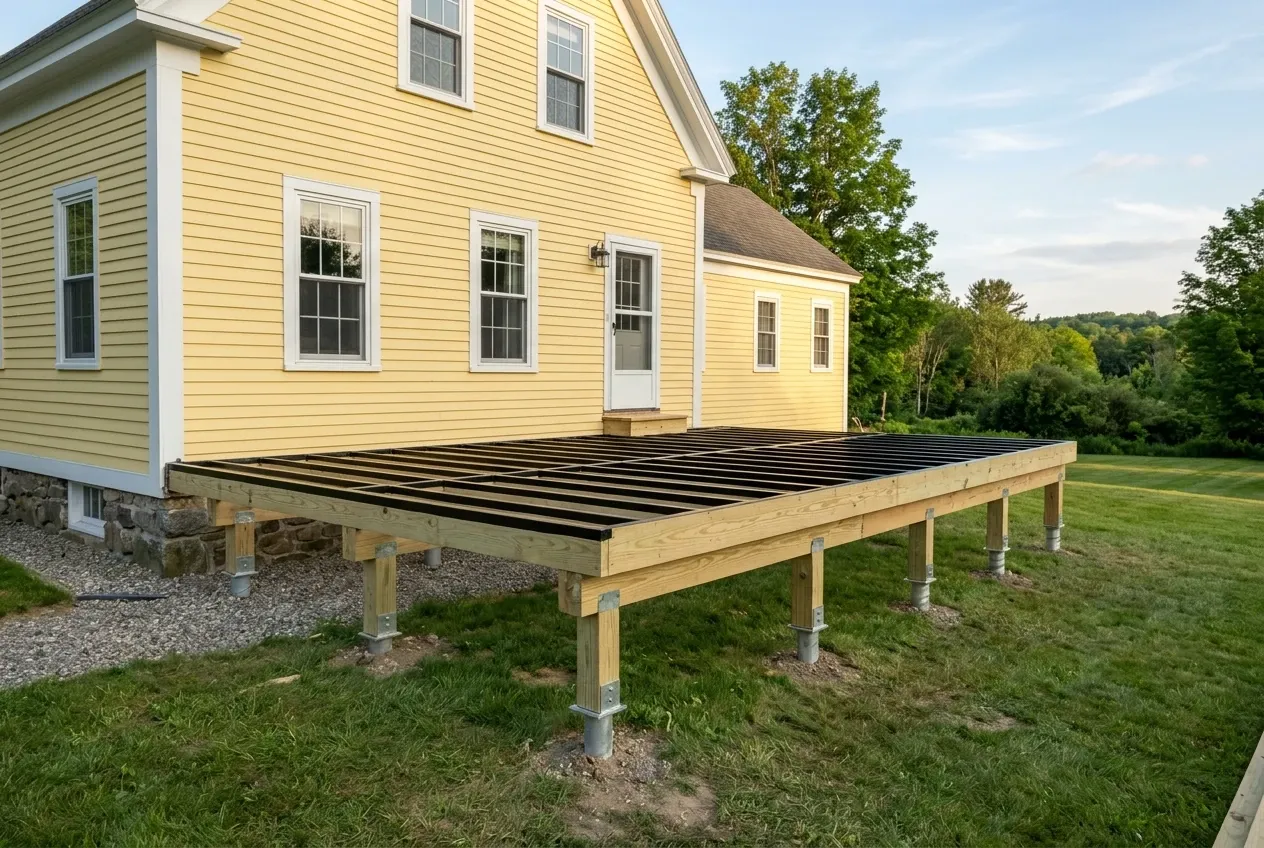
Our rule is that every post carries a ground-contact tag, and on a low deck with joists within six inches of the soil, the framing carries one too. NADRA, the deck builders' trade group, points out that above-ground lumber is still code compliant for framing, so the extra rating on low framing is our choice, not the code's.
The First Year of a Treated Deck in Central Maine
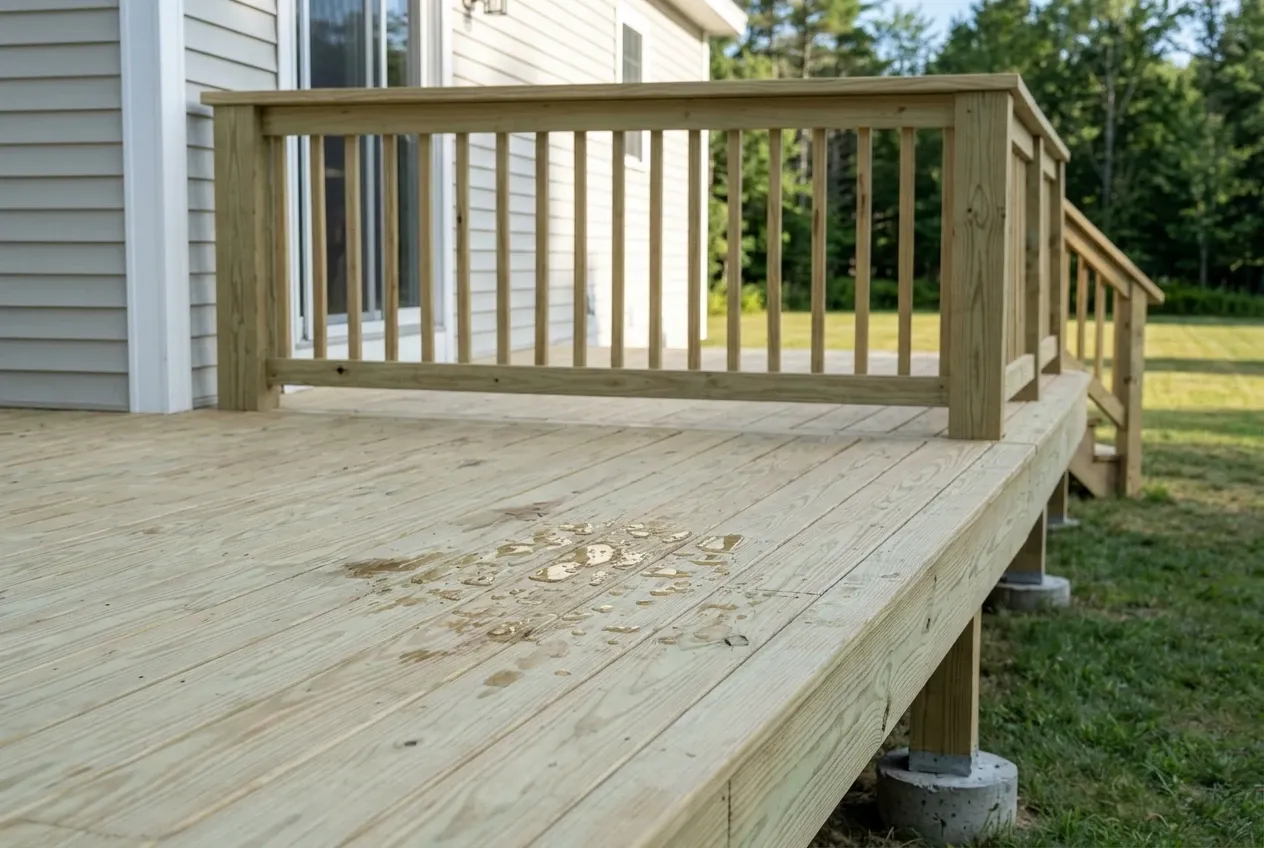
New treated lumber still holds water from treatment, and Viance's installation and care advice puts the usual wait before the first finish at about 60 days, though it admits drying time is hard to predict. The test is a few drops of water, and once the boards soak them up, the finish can go on.
We lay treated boards tight together, because Viance notes they shrink a little in width as they dry and the gap opens by itself. Every cut end and drilled hole gets a brush-on copper preservative, because Viance says a stain or sealer alone falls short at those spots.
After that, a central Maine winter does the testing, with snow sitting on the boards for months and mud season soaking them again. Viance's answer is a water repellent brushed on at least every second year, cleaners without chlorine bleach, and a walk around the whole deck before the snow comes.
Where Treated Boards Make the Smarter Buy
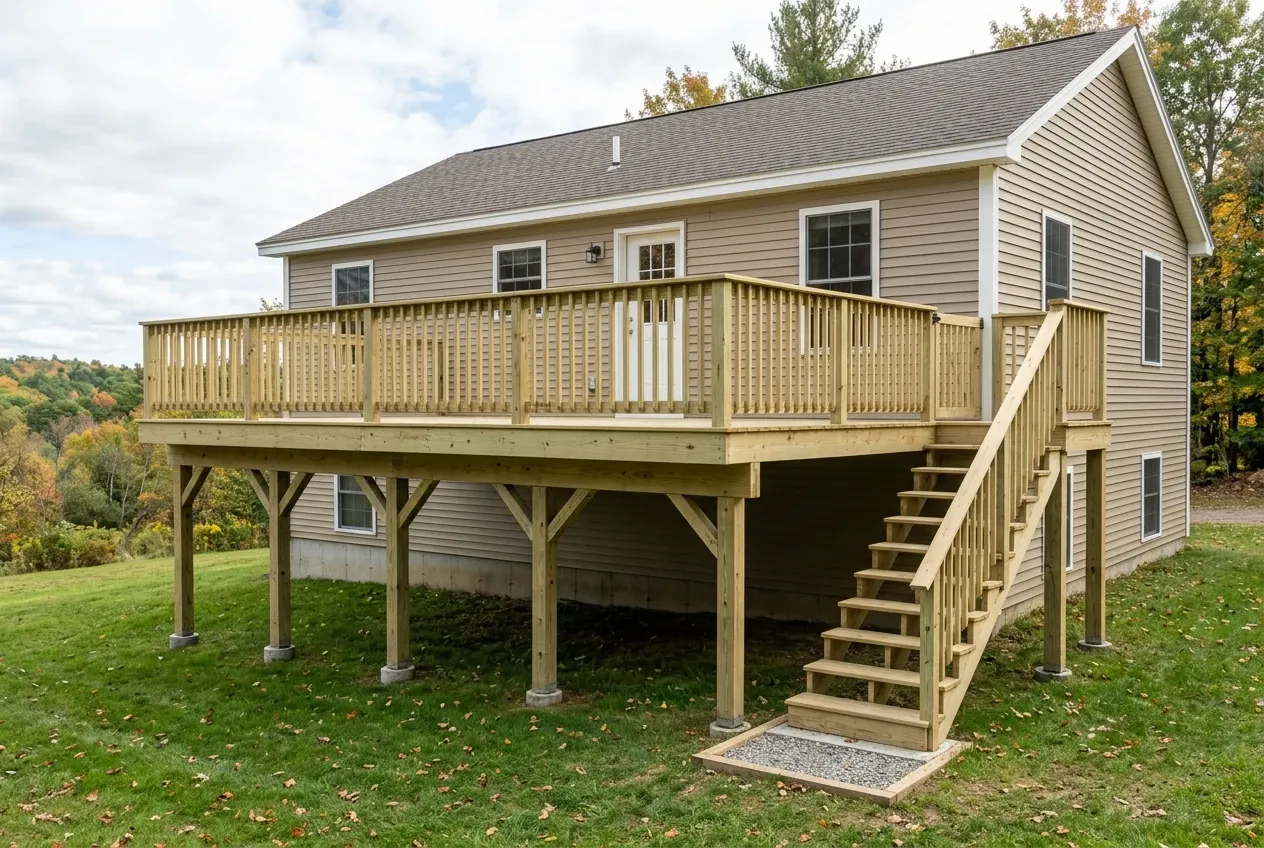
Treated boards make the smarter buy on a set budget, on a deck that may be rebuilt in a few years for an addition, and on a tall deck where posts, bracing and staging take most of the money anyway. On those decks we put the money into the frame and let plain treated boards keep the total in reach.
Composite starts to earn back its higher floor on a deck you plan to keep for good, because a treated deck asks for sealer every couple of years as long as you own it and a composite board is never sealed at all. Our composite decks page lays out that trade from the other side.
What Pressure-Treated Deck Services Do We Offer?
Our treated decks get the same care under the boards as on top of them.
Maine's adopted code table for deck fasteners calls for hot-dipped galvanized nails or stainless steel, and the deck guide the American Wood Council publishes, DCA 6, wants every joist hanger and post anchor galvanized or stainless. Viance warns against electro-galvanized fasteners and anything marked G-90 or G-60, so we check the hardware before it goes in.
- Ground-contact posts on footings below the frost
- Beams, taped joists and blocking, built heavy
- Treated boards, stairs and rail, every cut end sealed
How to Get a Treated Deck Built, From Soil to Stairs
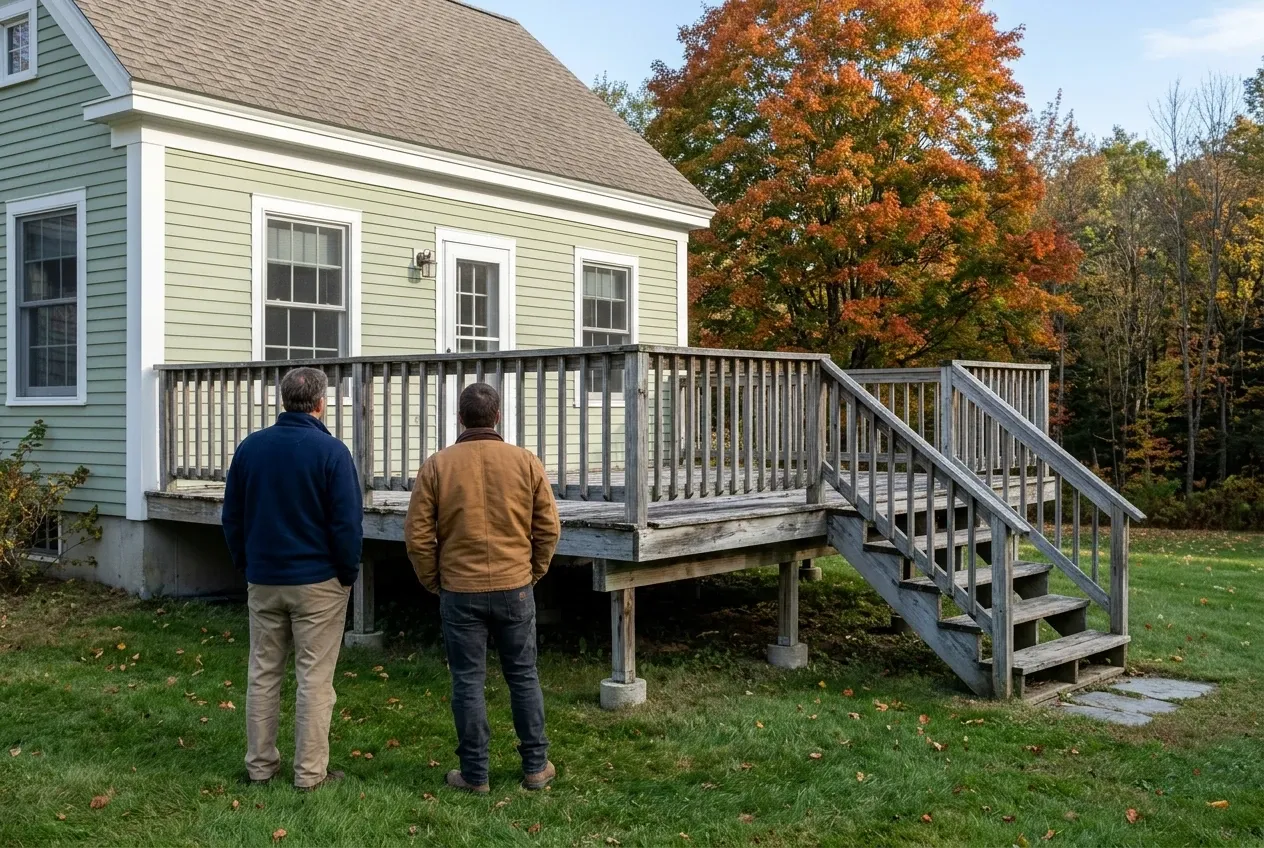
A look at the ground before any number.
We probe the soil and check the slope where each post will stand, look at the siding and framing where the ledger (the deck's house-side board, bolted to the house framing) would fasten, and go over any old deck. Where the house wall will not carry a ledger, we price a freestanding deck on its own posts and tell you why.
A line-by-line price and a contract with two signatures.
The written price breaks out the footings, framing, boards, stairs and rail, and once a job passes $3,000, 10 MRSA §1487 makes a signed written contract the law. Our deposit never tops one third of the price, and we file for any permit the town requires, though approval stays the town's call.
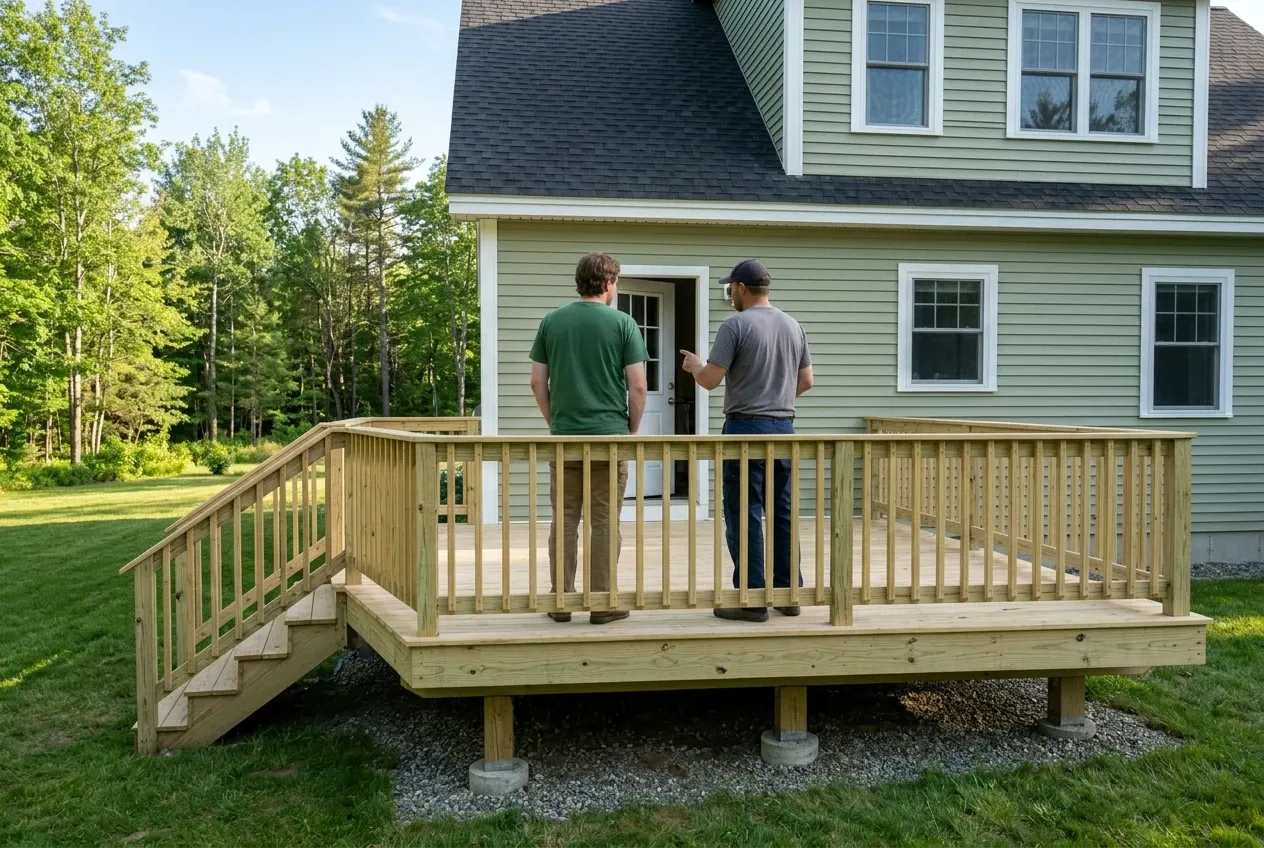
Footings, frame and tape before the first board.
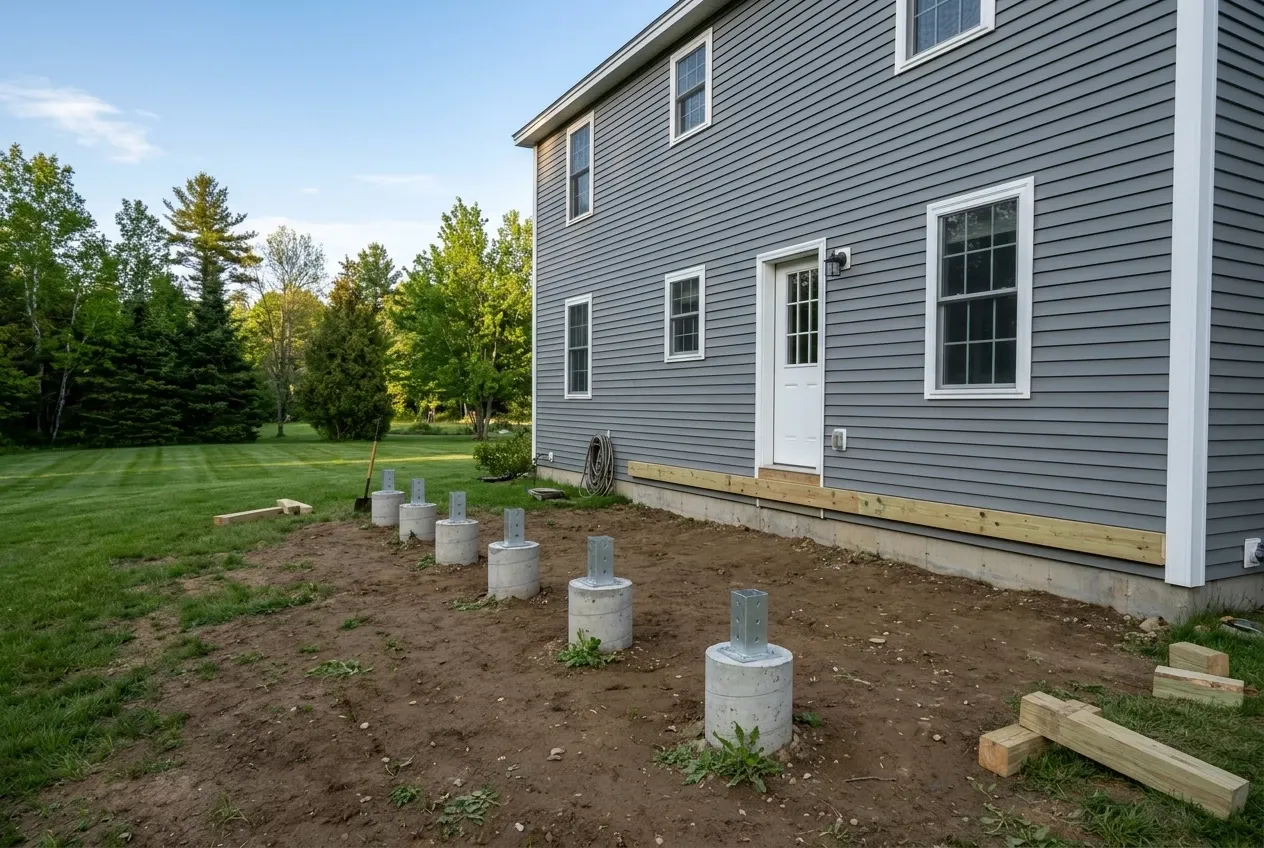
An existing deck comes off first and leaves with us, and then the footings are set 4 feet deep, usually as helical piles (steel posts with a screw-shaped plate, turned into the ground), with a concrete pier only at a spot that needs one. The posts, the beam and the taped joists go up next, and when the last stair tread is down we walk across the new deck with you.
Are Pressure Treated Decks the Right Buy for You?
Pressure treated decks are the right buy for most first decks and set budgets, and for owners who like real wood underfoot and do not mind sealing it every couple of years.
They are the wrong buy for an owner who will never pick up a brush again, because Viance's call for sealer every two years comes with every treated deck. If that is you, the higher composite floor buys the chore away.
Either way, the frame is treated lumber, under composite boards too, so the bigger choice is how that frame is built. Spend first on ground-contact posts, a flashed ledger and footings that reach under the frost line, the level a hard winter freezes down to, then choose the boards.
Who Picks Treated Wood, Where Does It Go, and When?
What kind of owner is a treated deck right for?
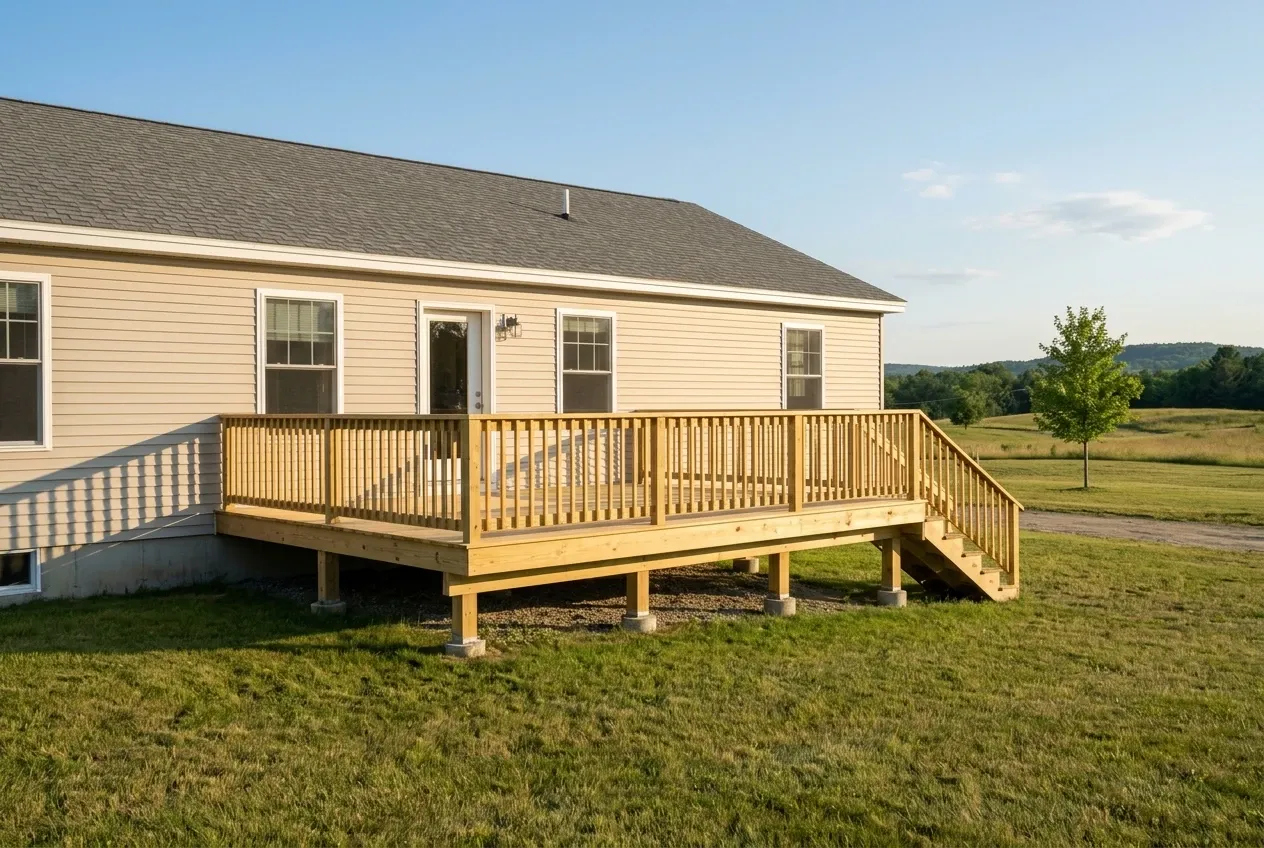
A treated deck is right for an owner building a first deck on a set budget, or for anyone who wants real wood underfoot and is fine with a brush and a can of sealer.
Where does a treated deck need the most protection?
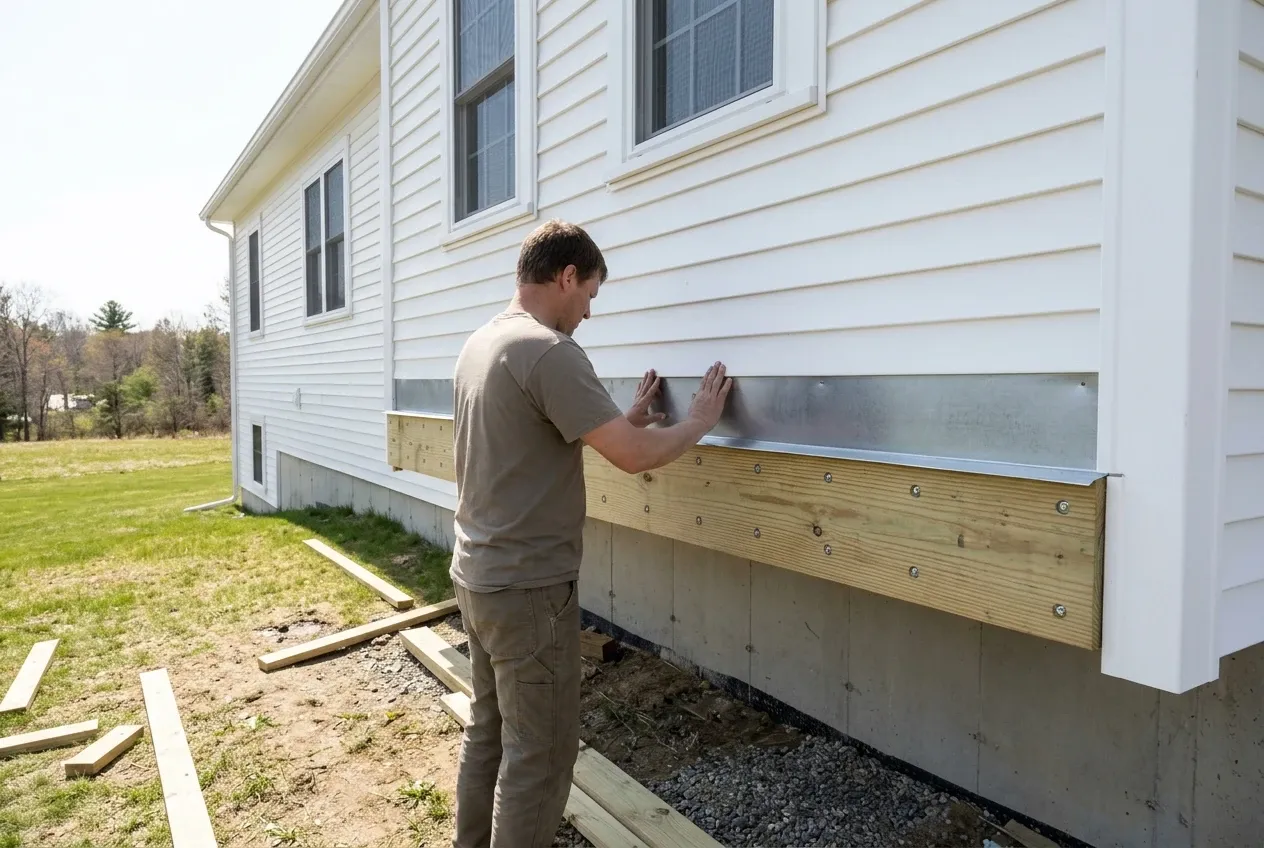
A treated deck needs the most protection where water sits: the tops of the joists, the rim (the board that caps the joist ends) and the ledger against the house. Maine's adopted code wants the ledger flashed so water never reaches the house band joist, and joist tape covers the rest.
When in the year do we build a treated deck?
We build treated decks between spring and late fall, and the footings go in while the ground can still be dug. Because the first stain waits about 60 days, a deck finished late in the season often gets its first coat the next spring.
How Much Does a Treated Wood Deck Cost to Build?
A treated wood deck with a simple layout costs about $80 per square foot to build, a number averaged over many quotes, not one written for your yard, and nothing new goes up for under $10,000. Layouts with more to them (levels, angles, a wraparound or a tie-in to the house) come in at $100 to $120 per square foot across the same quotes.
| Deck | What it usually means | Average |
|---|---|---|
| Pressure-treated, simple layout | one level, a few steps, treated boards and rail | about $80 per square foot, nothing new under $10,000 |
| Bigger or more complex layout | levels, angles, wraparounds, tie-ins, more stairs | $100 to $120 per square foot |
| Treated frame, composite boards | the same taped frame with composite or PVC boards and composite rail | from $15,000 |
Waterville-area averages pooled from many quotes, never the price of your own deck, for the footings, frame, boards, rail and stairs as installed. Height, how many stairs there are and anything an old deck is hiding can move the figure, and Viance is a name that belongs to its maker, which has no tie to us.
Why does a little treated deck run more per square foot?
A little treated deck runs more per square foot because every post still needs a full footing, and those footings are a large share of a small bill. In most cases a 12x16 runs about $1,000 over a 10x10, so going a size bigger is often money well spent.
Which costs push a treated deck toward the top of the range?
The costs that push a treated deck up the range start with a ramp, followed by the number of stairs, then having no reusable footings to start from, then how involved the layout is and how far the deck sits above grade. Past about 2 feet up, staging takes roughly an extra day of crew time, which matters most on a small deck.
Treated or composite: which costs less over 20 years?
Over 20 years, treated wood is still the less costly deck to build, but it asks for sealer every two years the whole time, and by about that age we find a wood deck is done. If you plan to stay that long and dislike staining, composite earns its higher floor.
Want a Treated Deck Priced From the Footings Up?
Send us an estimate request and we will come look at the soil, the slope and the wall the deck will tie into, then hand you a written price with the footings, frame and boards on separate lines. The request costs nothing, and neither does the price.