
Deck Builders in Clinton, ME
Deck builders in Clinton, ME file a deck under the town's accessory structure permit, and Clinton's 2021 form puts the fee in five words: "Decks Permit fee is $30.00." We confirm that figure is still current when we file, after walking the lot, checking the wall a ledger would meet and testing any old deck on the farm or village property.
- (207) 679-0381
- 143 Silver St, 2nd Floor, Waterville
- [email protected]
- Decks only, footings to rail
- Free estimate requests
- 22 central Maine towns, Waterville to Skowhegan
This page covers new decks and deck replacement in Clinton, Maine, a Kennebec County farm town on the north side of the Sebasticook River, with villages at Clinton and Morrison Corner.
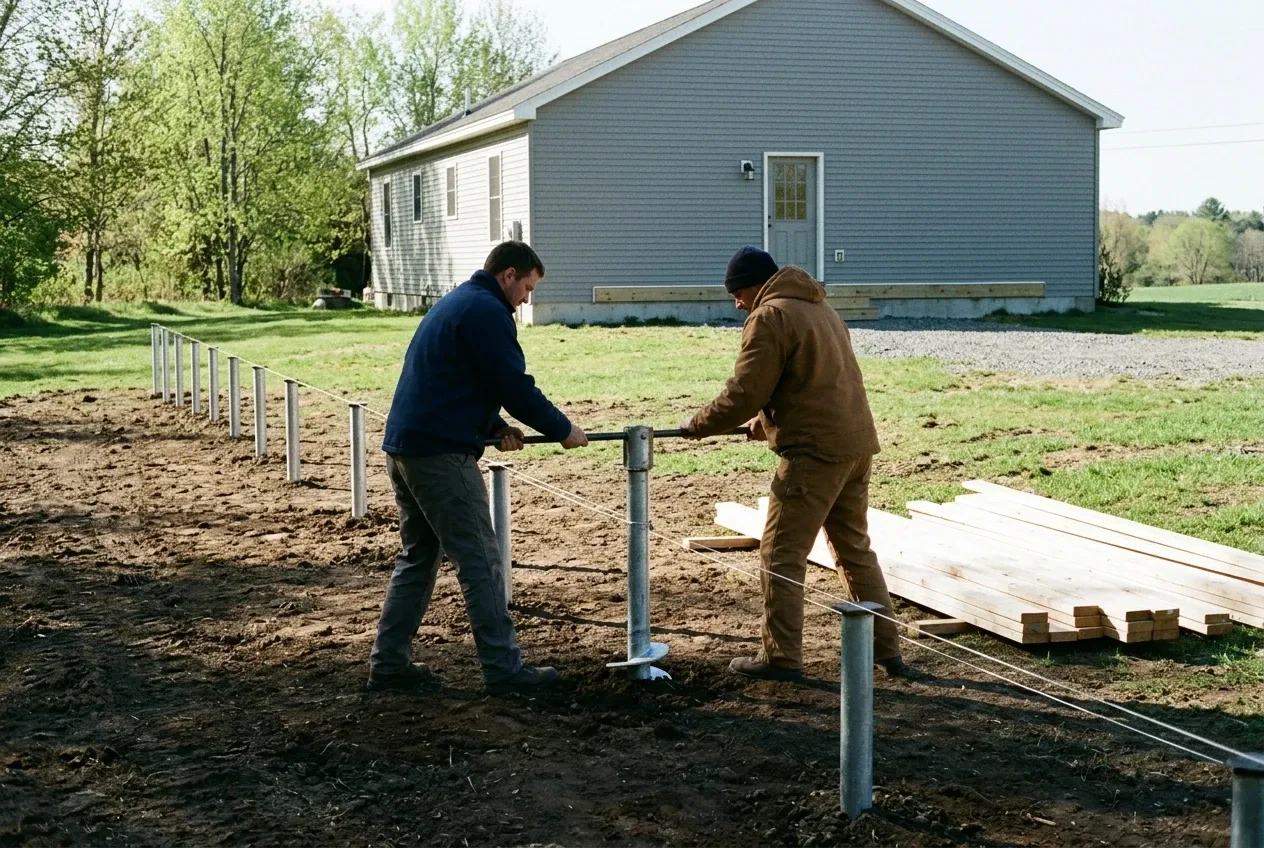
Deck Builders Waterville frames Clinton decks heavier than the minimum on helical piles 4 feet down, measures the front setback from the road's centerline, and checks the FEMA flood zones before a footing goes in.
The figure to keep: a simple pressure-treated deck in Clinton averages about $79 per square foot, and composite or PVC with composite rail starts from $15,000. Both are averages of many quotes, never a quote for one lot.
Why Are Clinton Setbacks Measured From the Road?
Clinton setbacks are measured from the road because the Land Use Ordinance takes the front setback along a public road from the centerline, not from the property line, and sets it at 50 feet in the Rural and Medium Density districts and 35 feet in Low Density. A deck on the front or side of a farmhouse built close to the road can run out of room fast, so we measure from the middle of the road before drawing anything.
- A $30.00 deck permit on Clinton's 2021 accessory form
- Front setbacks of 50 feet from the centerline in Rural lots
- Flood zones A and AE checked before a pile goes in
Get your free estimate request sent in 60 seconds!
Prepare your request below, then send it from your email app. Or call (207) 679-0381.
What Towns Next to Clinton Do We Serve?
See all 22 towns we serveWhat Decks Work on Clinton Farms and Village Lots?
Clinton runs from working farms to village homes near the town center and postwar ranches along the main roads, and each of those calls for one of three decks.
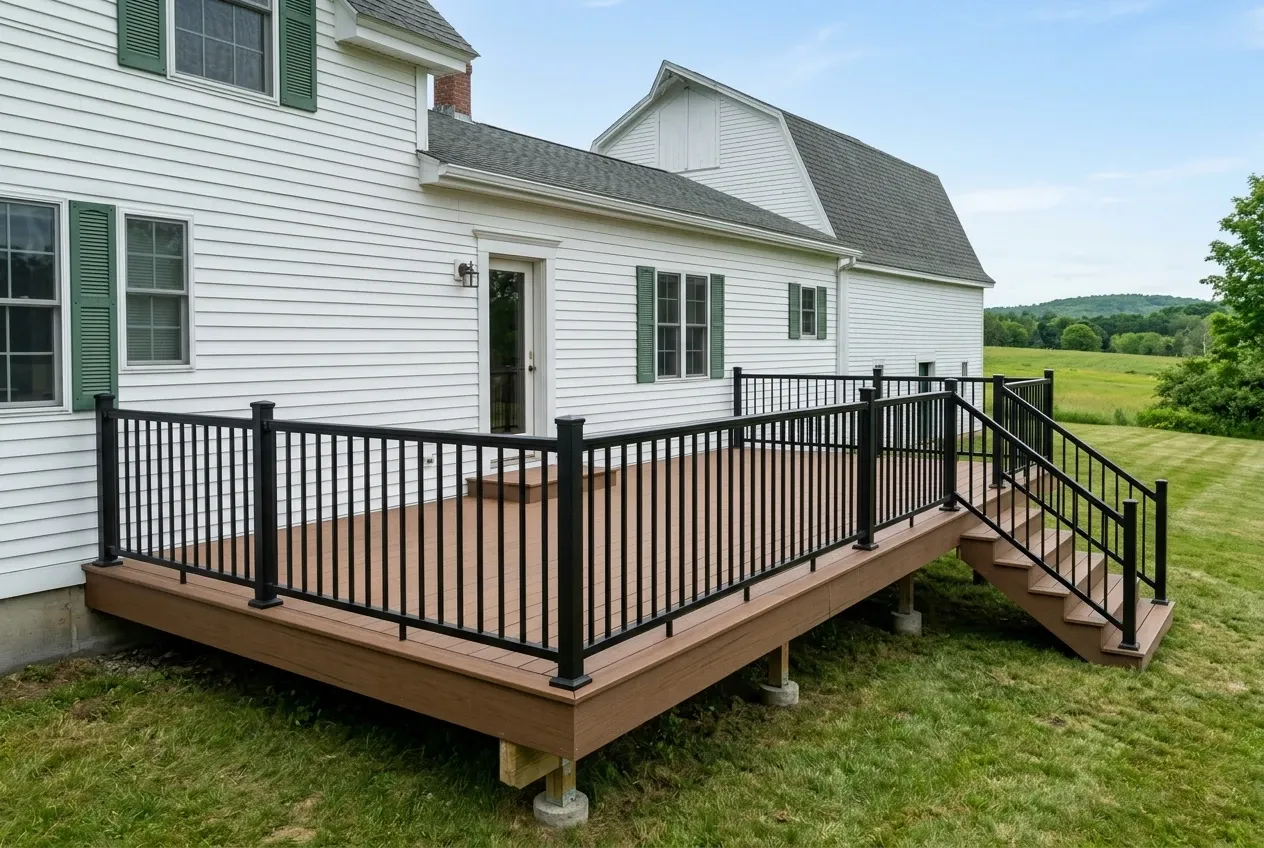
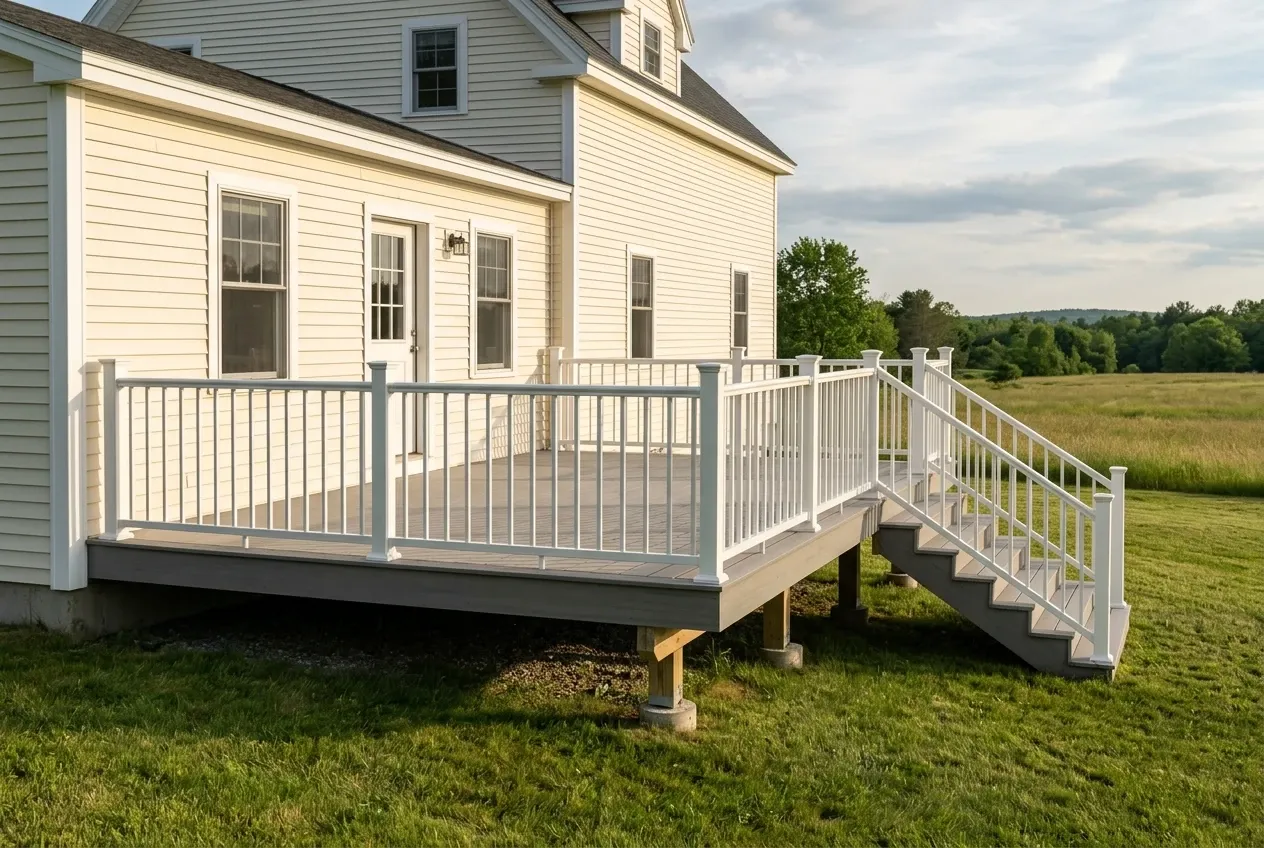
Composite Decks for Clinton Farmhouses
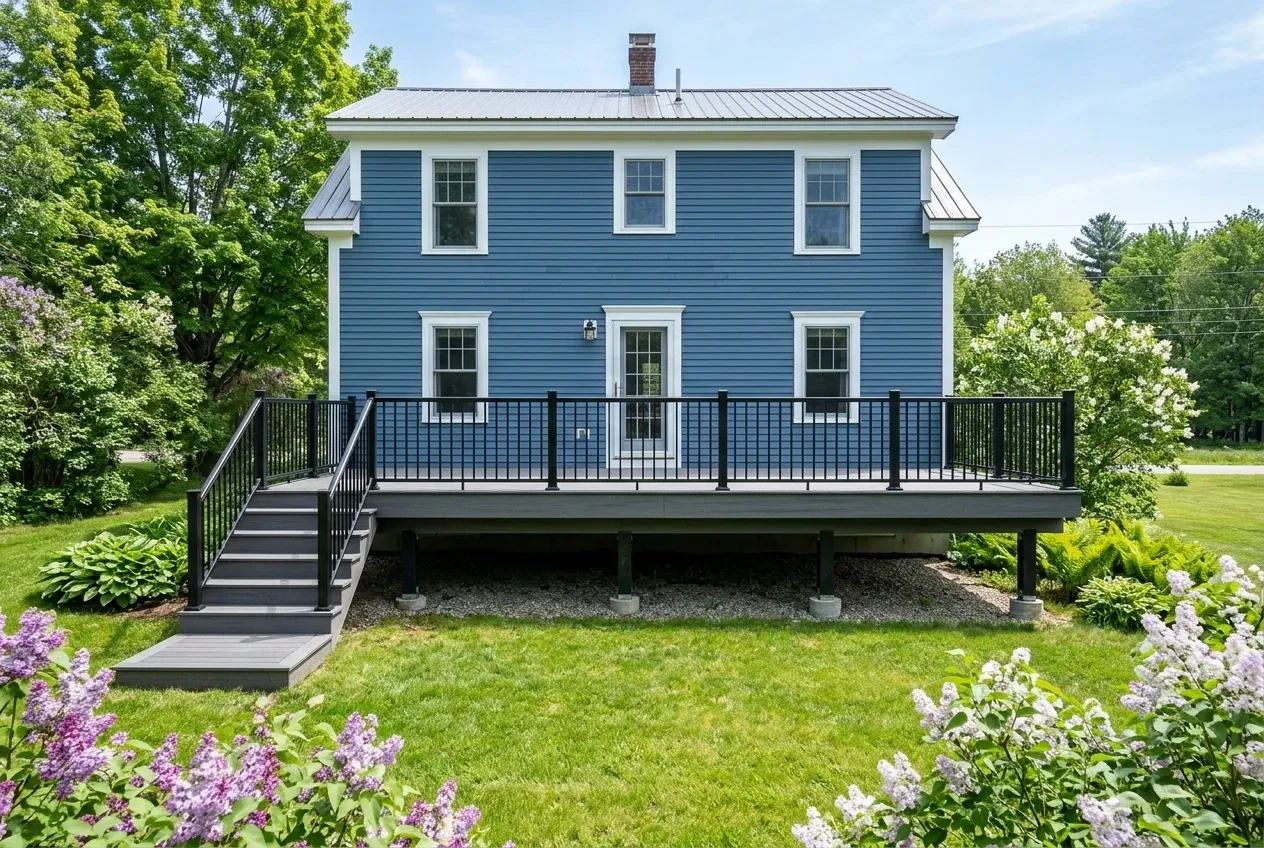
Composite decks are our recommendation for a Clinton farmhouse whose owners want a deck that rides out a string of hard winters with no stain at all. We frame for them with joists 16 inches apart, close that to 12 inches when the boards are PVC, and wrap every joist top in tape so the wood beneath the boards stays dry.
Clinton's deck permit form has whoever signs it agree to move or remove any structure that ends up encroaching on a setback. On a farm lot that means we stake the lot lines and the road's centerline before a single footing goes in, not after.
Pressure-Treated Decks on Clinton Ranches
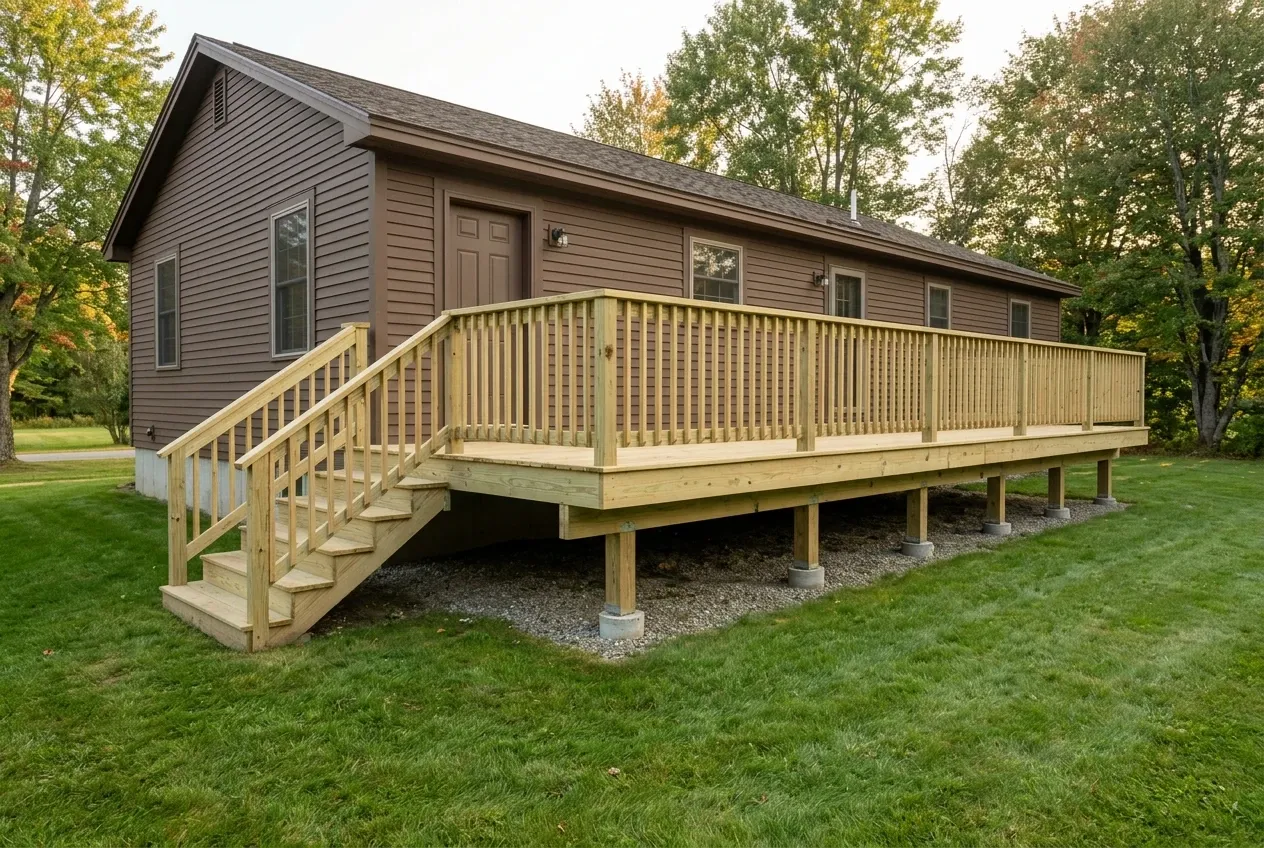
Pressure-treated decks suit the postwar ranches along Clinton's main routes, where a low deck and a few steps off the kitchen door keep the price close to the floor. Each post is cut from lumber rated for ground contact, and the treated boards get their first stain once they have dried out from the treatment.
The town's residential permit form lists piers among its foundation types and says precast piers and helical piles "shall be installed per manufacturer's specifications." That matches how we set a Clinton deck's footings: 4 feet down, to the maker's specifications.
Deck Replacement Near Clinton's Village Center
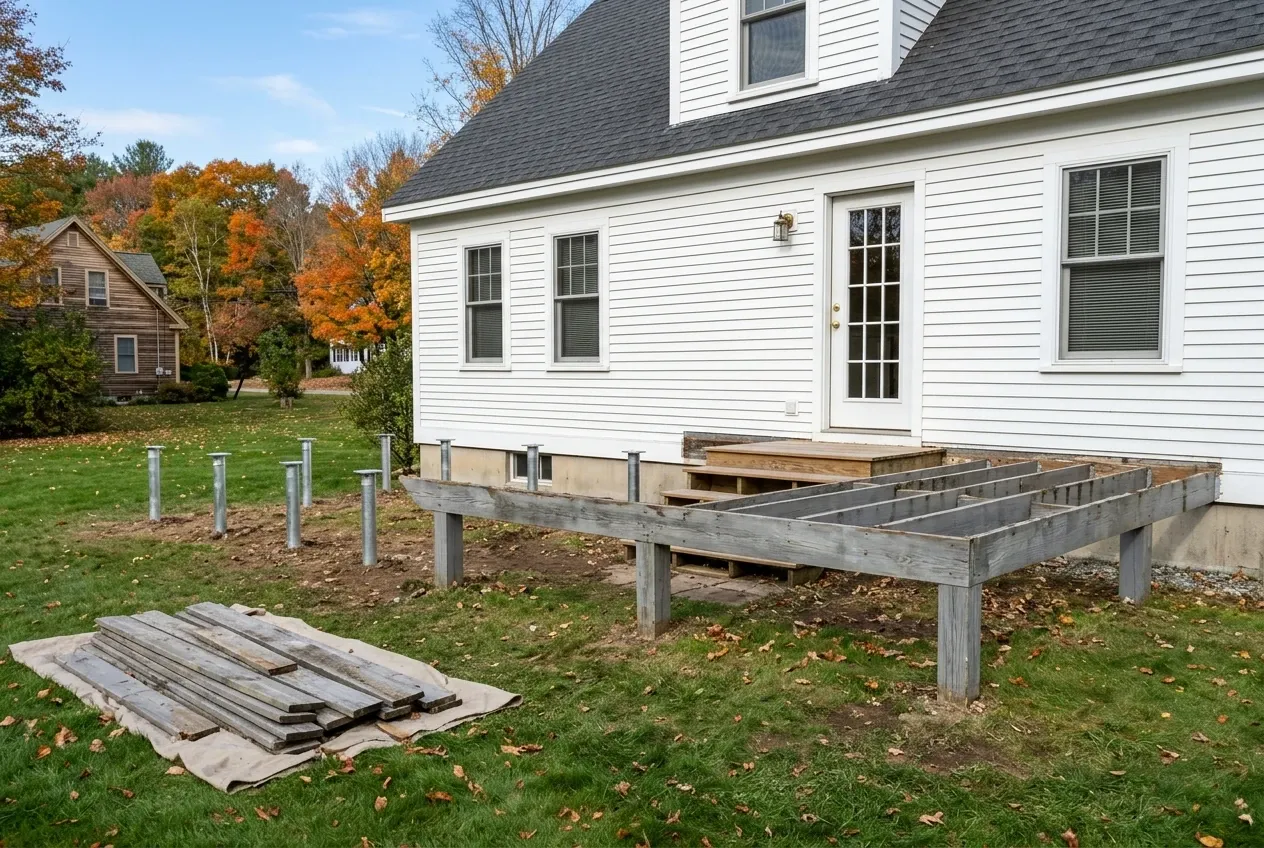
Deck replacement is the fix when a deck in Clinton's village has gone soft underfoot, pulls away from the house or rocks on its stairs. We strip it to the footings and build new, because the frame is where an old deck fails and the cheapest part to get right.
If the old deck already sits inside a required setback, Clinton's ordinance says an addition is not permitted on the side of a structure that already encroaches. A bigger replacement then grows toward the open side of the lot, and we draw it that way from the first sketch.
What Deck Services Do We Offer in Clinton?
Three parts of a Clinton deck sit outside the boards and get priced on their own lines.
Clinton's accessory structure permit form covers decks, asks for the front, side and rear setbacks your district requires and whether any water or wetland is affected, and the fee schedule wants a scaled drawing at 1/4 inch to the foot. We draw the deck to that scale and file it with the codes office, and the approval stays with Clinton's code officer.
- Helical piles or precast piers, 4 feet down
- Stair runs with a handrail and landing
- Skirting to close in a farmhouse deck
How to Take a Clinton Deck From Scale Drawing to Stairs
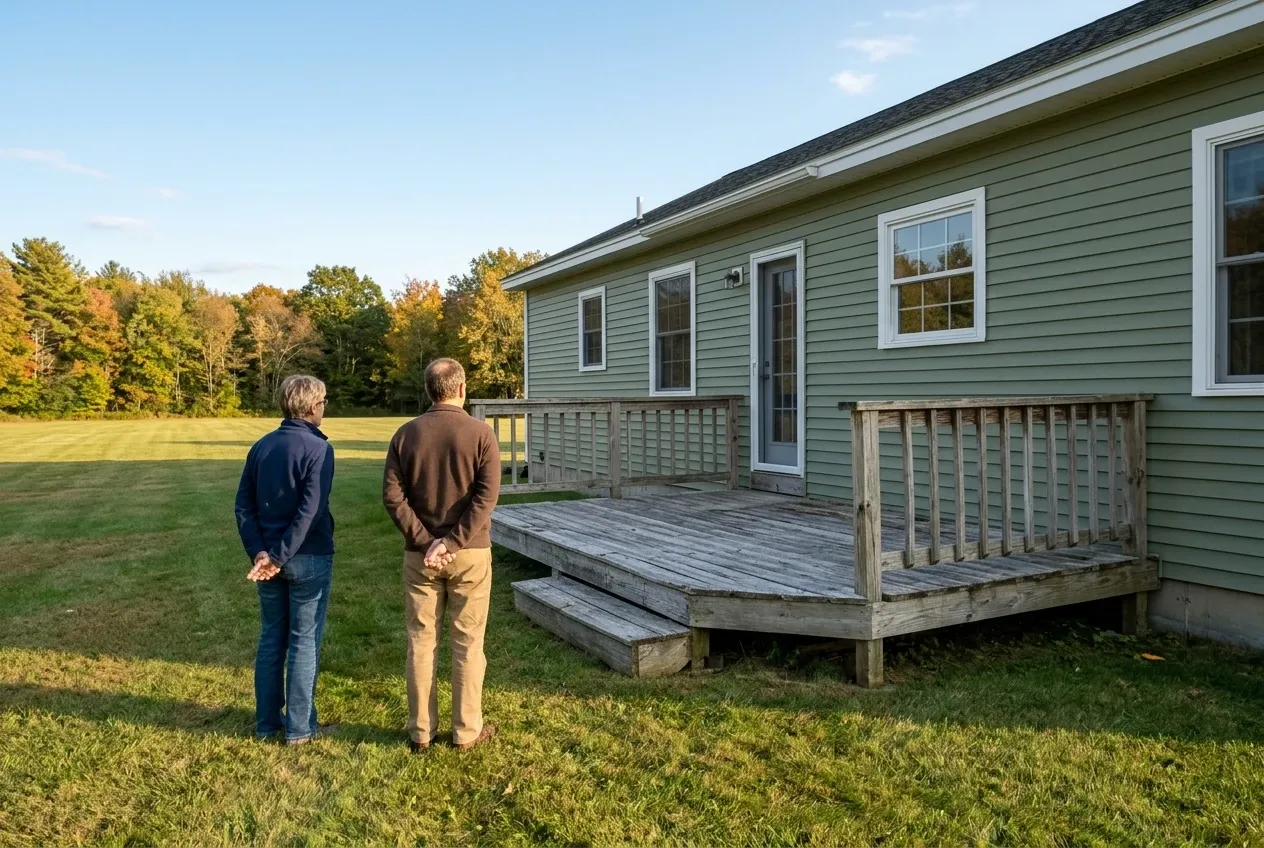
The lot, the house, the old deck.
We walk a Clinton lot from the road to the back line, check the siding and band a ledger would fasten through and test any old deck's posts, then measure the front setback from the road's centerline.
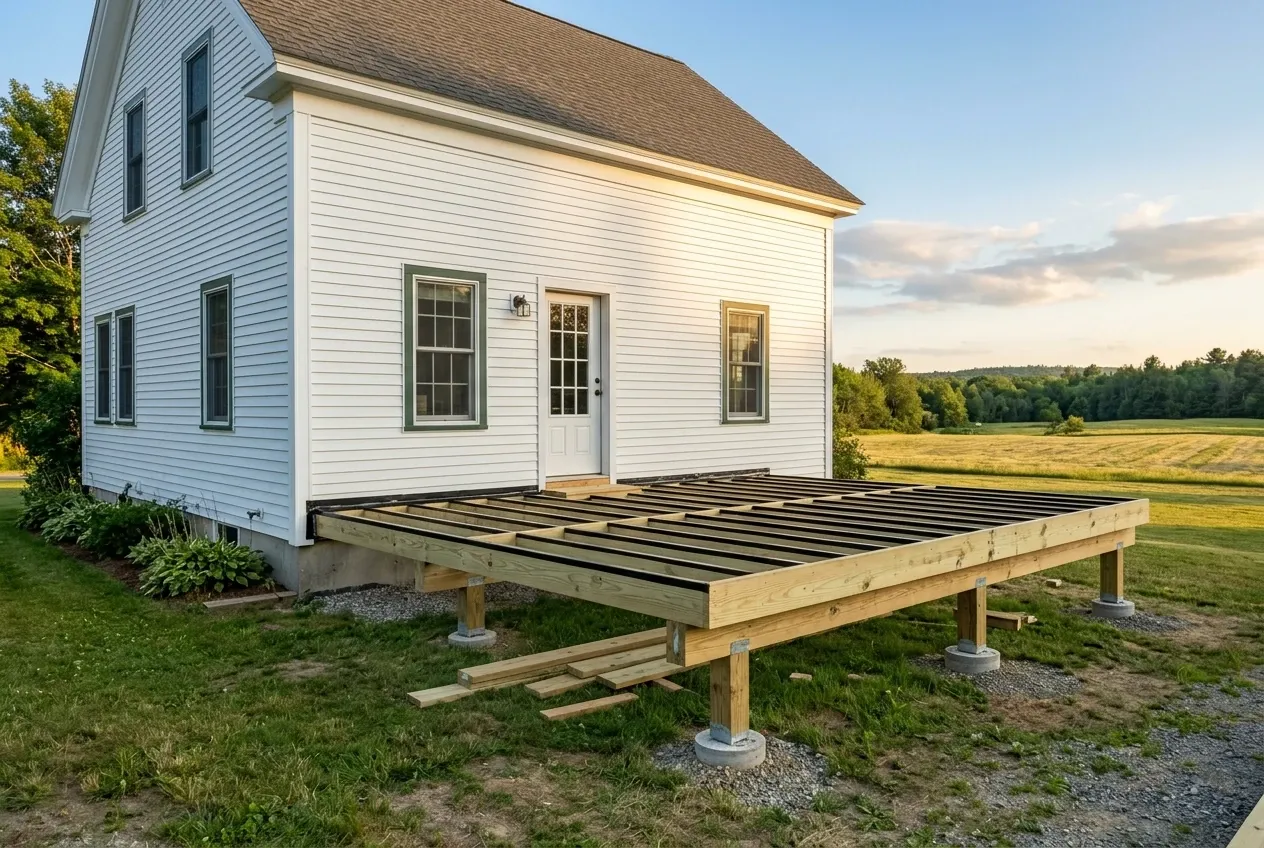
A number on paper, then signatures.
The Clinton price arrives on paper with the footings, framing, decking and rail priced one by one. When a Clinton job tops $3,000, 10 MRSA §1487 requires a contract you sign, and what you pay up front on a Clinton deck cannot pass a third of its price.
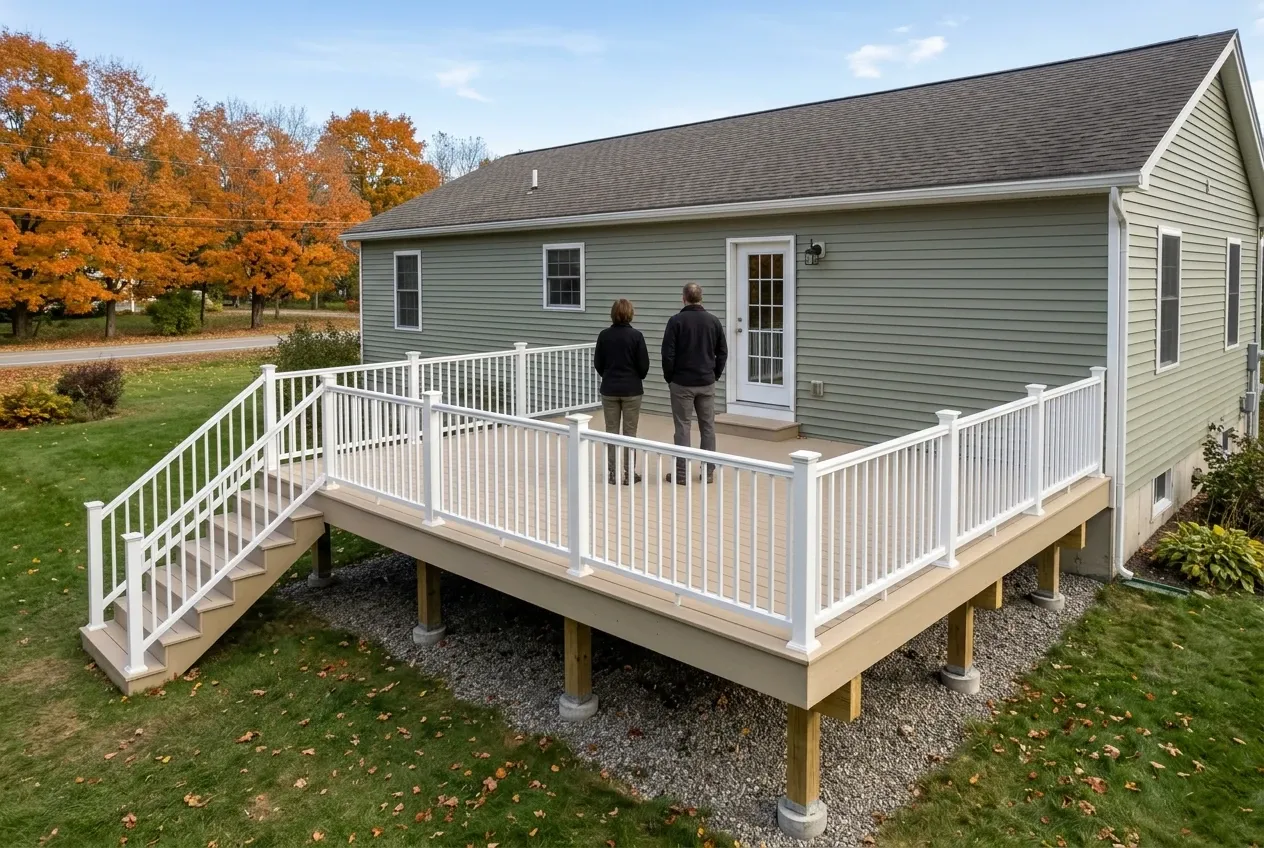
Below grade first, then up.
Footings and framing come first and the boards, rail and stairs last, with the old deck torn out and hauled off the farm or the village lot. Once the Clinton deck is finished, we walk every board of it with you.
What Should Deck Builders in Clinton, ME Check First?
Deck builders in Clinton, ME should check the ground first, starting with the town's flood maps, because the Floodplain Management Ordinance requires a Flood Hazard Development Permit before any construction in Zones A and AE, mapped by FEMA on June 16, 2011. Footings come next, 4 feet down on helical piles (shafts of steel with a screw plate, turned into the soil) on most jobs, or on a concrete pier.
Then the frame and the house. Clinton's residential form asks whether a structure will need MUBEC inspections "to appease your lending institution or insurance company," and we frame every Clinton deck as if one is coming: heavier than the minimum, joists taped, the ledger flashed or the deck freestanding where the wall cannot carry it.
The paper comes last: the deck permit, the front setback from the centerline, and the side and rear lines your district sets. On a lot near the Sebasticook we also ask the code officer which shoreland rules apply before a deck is drawn.
Who Inspects a Clinton Deck, Where and When?
Who asks for MUBEC inspections in Clinton?
MUBEC inspections in Clinton are asked for by the owner, since the town's form says Clinton "is not required to enforce MUBEC because our population is under 4000 people," and anyone who needs those inspections must plan them with the code officer in advance. Clinton counted 3,370 people at the 2020 census, and state law lets a town that size skip enforcement while barring it from adopting any other building code.
Where do Clinton's lot lines limit a deck?
Clinton's lot lines limit a deck at the front, where the setback runs from the road's centerline, and at the side and rear, where the lot table sets 20 feet in the Rural and Medium Density districts and 15 feet in Low Density. We confirm the figures for your district with the town before drawing, since the deck has to clear all three.
When does a Clinton deck permit lapse?
A Clinton deck permit lapses if work does not start within twelve months of issue. The Land Use Ordinance gives the code officer fourteen calendar days to approve or deny an application, and the residential form asks for 36 hours' notice before any required inspection.
How Much Do Clinton Decks Cost Per Square Foot?
Clinton decks cost about $79 per square foot when kept to plain pressure-treated lumber, rising to $99 to $118 per square foot when the plan adds a second level, an angle or a wraparound, averaged across many quotes. A full treated deck in Clinton starts from $10,000, while a Clinton deck in composite or PVC, railed in composite, starts at $15,000.
| Deck | What it usually means | Average |
|---|---|---|
| Pressure-treated, simple layout | one level, a few steps, treated boards and rail | about $79 per square foot, nothing new under $10,000 |
| Bigger or more complex layout | levels, angles, wraparounds, tie-ins, more stairs | $99 to $118 per square foot |
| Composite or PVC | composite or PVC boards with composite rail | from $15,000 |
Clinton numbers average many quotes for an installed deck, footings to handrail, and read as a range, not as the price of your own lot. A deck high off the ground, a long stair or a frame found rotten under old boards can carry one Clinton job above them.
Why do small Clinton decks land higher per foot?
Small Clinton decks land higher per foot because the footings under them cost about the same at any size and take a larger bite of a small price. In Clinton, stretching a deck plan from 10x10 out to 12x16 usually adds about $1,000, a modest sum for a good deal more room.
Which costs push a Clinton deck toward the top?
The costs that push a Clinton deck toward the top are, in order, a ramp, more stairs, missing footings, a layout with a second level or a tie-in to the house, and height. Height adds about a crew day of staging once a Clinton deck rises past roughly 2 feet, and on a small Clinton deck that single staging day is a heavy share of the bill.
How much more is a Clinton replacement than a new deck?
A Clinton replacement runs above a new deck by the cost of the tear-out, the haul-away and any new footings the old posts make necessary. We price it after looking at what the old posts stand on, so the written number covers the deck you actually have.
Ready to Put a Clinton Deck on Paper?
Request a free estimate. Once we have walked the lot, studied the house wall and tested any old deck, we write the Clinton price with footings, frame and boards each spelled out.