
Deck Builders in China, ME
Deck builders in China, ME fill in a "Decks Only" section on the town's own building permit application, which asks for joist size, spacing and span, the height of the deck from grade, the guard rail height and the gap between balusters. We get those answers from your lot itself, after looking over the ground, the wall of the house and any deck already there.
- (207) 679-0381
- 143 Silver St, 2nd Floor, Waterville
- [email protected]
- Decks only, footings to rail
- Free estimate requests
- 22 central Maine towns, Waterville to Skowhegan
This page covers new decks and deck replacement in China, Maine, a town of 4,408 people whose share of China Lake includes the whole east basin and its 452 developed shoreline lots.
Deck Builders Waterville sets footings 4 feet down, frames heavier than the minimum and answers the deck questions on China's own permit form, from joist span to baluster spacing, before a China deck is framed.
The figure to keep: a simple pressure-treated deck in China averages about $82 per square foot across many quotes, and composite or PVC decks start from $15,000. Use both as planning averages, never as a quote.
Why Does China's Permit Form Ask About Deck Rails?
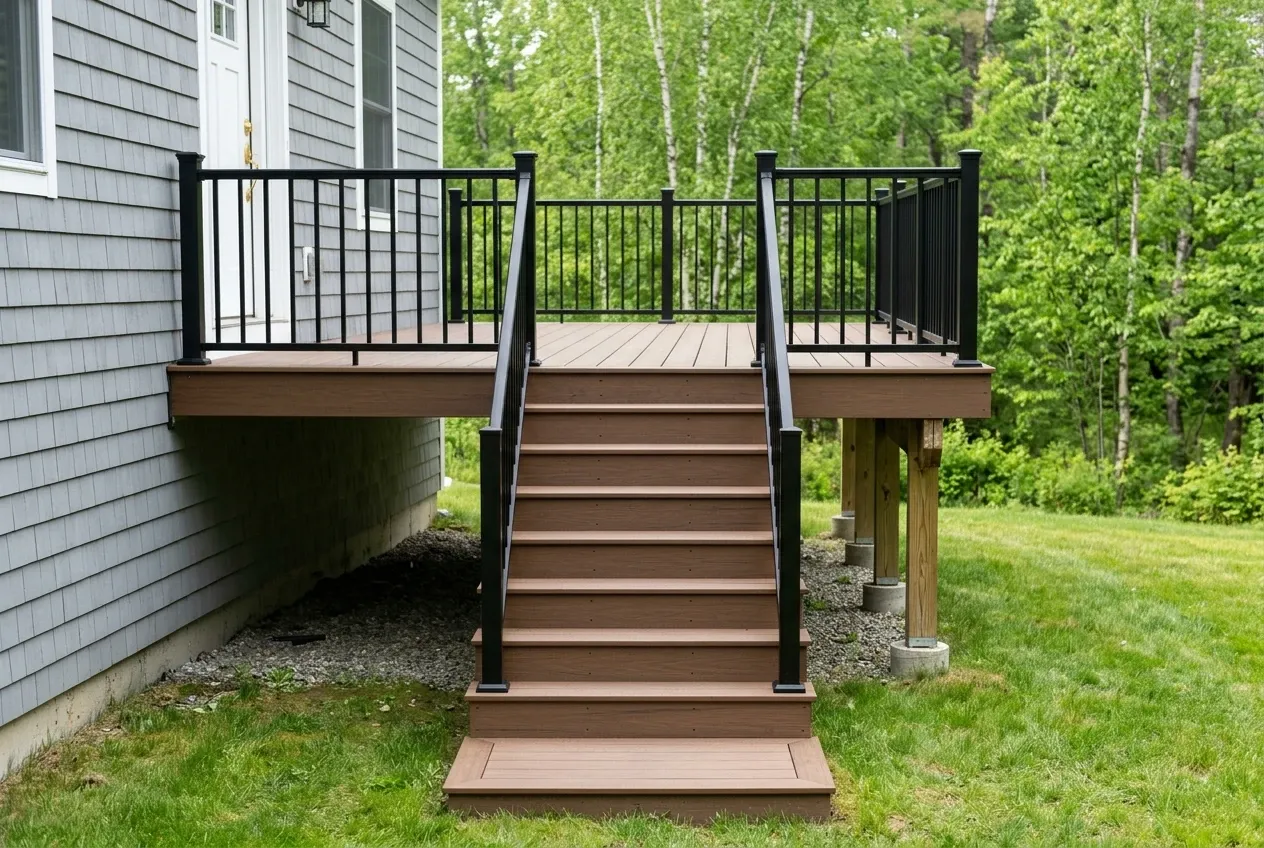
China's permit form asks about deck rails because the town checks the guard on paper before anyone builds it, down to the spacing between balusters, which the form holds to a 4-inch opening at most. A rail that fails that line fails the form, so we size the guard and balusters before the drawing goes in.
- A "Decks Only" block on the 2026 town application
- A $50 MUBEC inspection listed for decks
- Steps up to 4 feet wide, landings to 16 square feet, not counted as expansion
Get your free estimate request sent in 60 seconds!
Prepare your request below, then send it from your email app. Or call (207) 679-0381.
Which Towns Around China Lake Do We Serve?
See all 22 towns we serveWhat Decks Do China's Lake Camps and Villages Need?
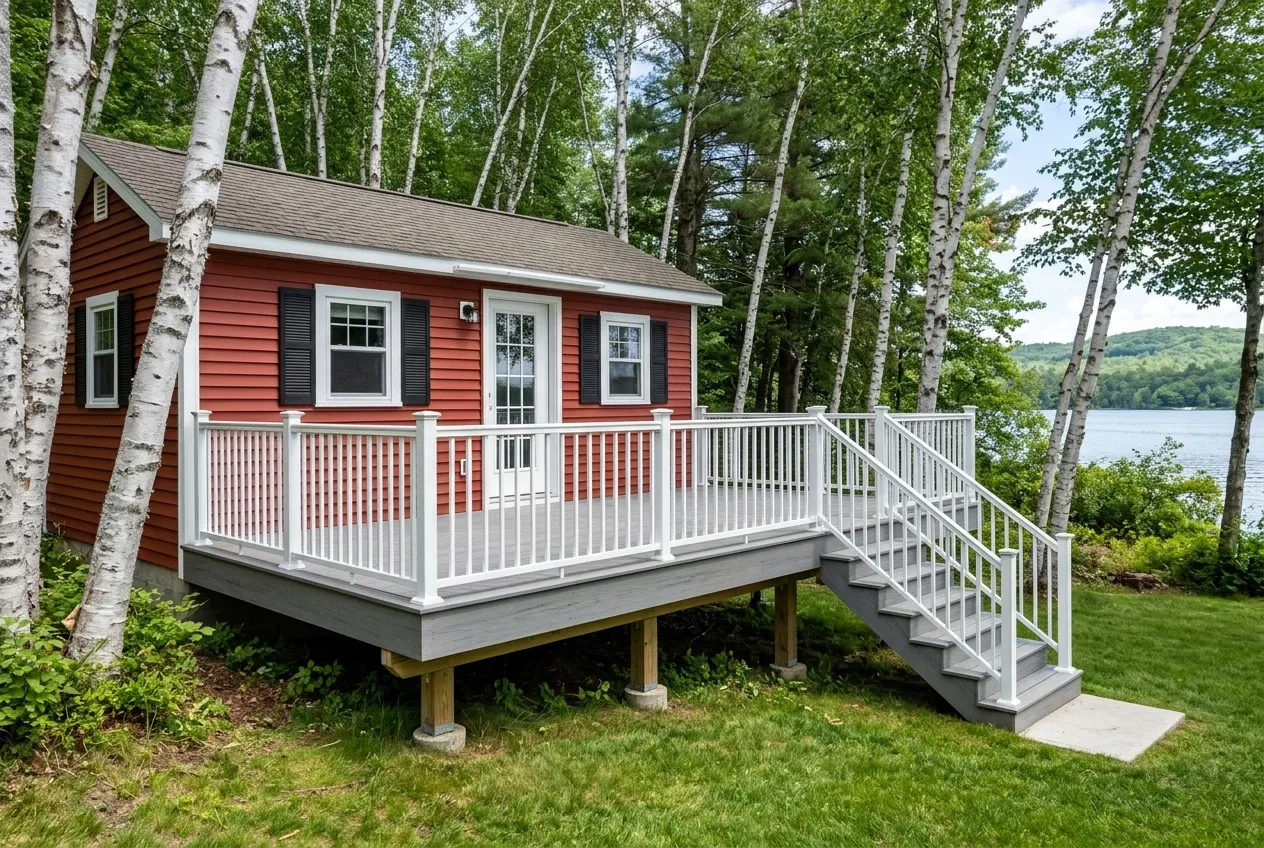
China's deck work divides between the camps and houses on China Lake, Three Mile Pond and Branch Pond and the older houses in its villages, from Weeks Mills and Branch Mills to China Village and South China, and three jobs handle both.
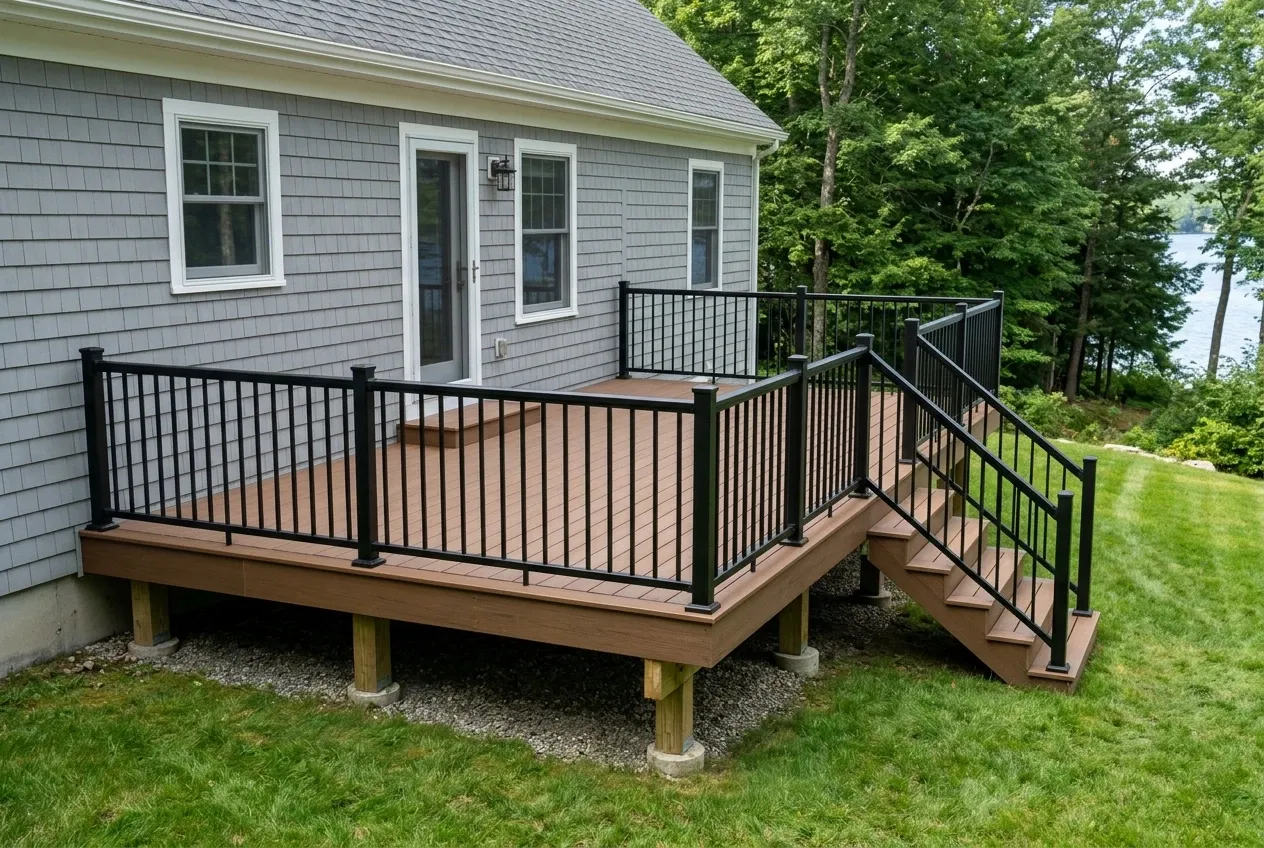
Composite Decks for Camps on China Lake's East Basin
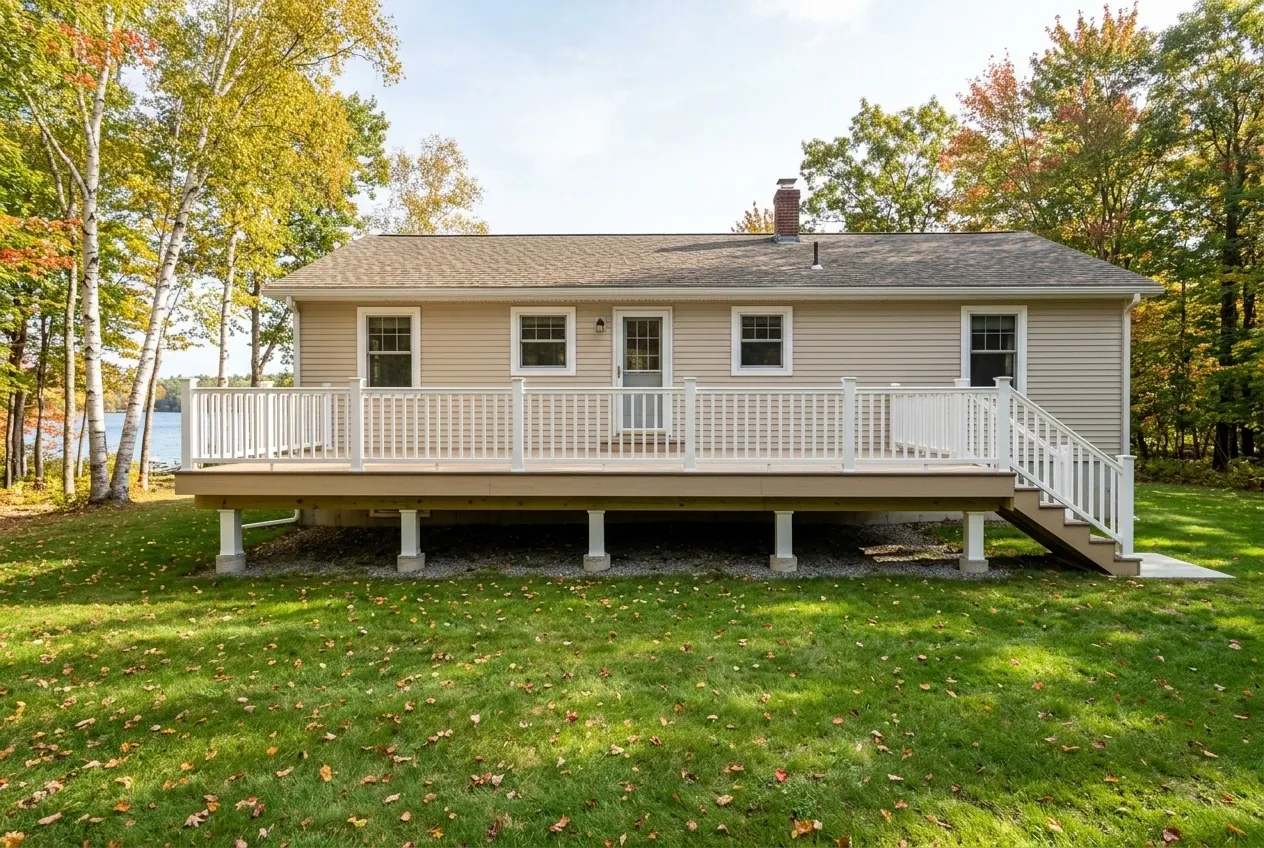
Composite decks are our recommendation for a China Lake camp, because the 2022 watershed plan counts 452 developed lots on the east basin shore and finds 61 percent of them seasonal. A camp that sits closed half the year does better with boards that never need stain, and the same plan expects small seasonal camps to turn into larger year-round homes.
For composite, joists go 16 inches apart and 12 under PVC, every joist gets joist tape (a peel-off membrane laid along the top edge so water cannot follow a screw into the wood), and a picture-frame border board hides the cut ends. Hidden clips hold most boards, and PVC gets a screw through the face and a plug, since PVC swells and shrinks more.
Pressure-Treated Decks in China Village
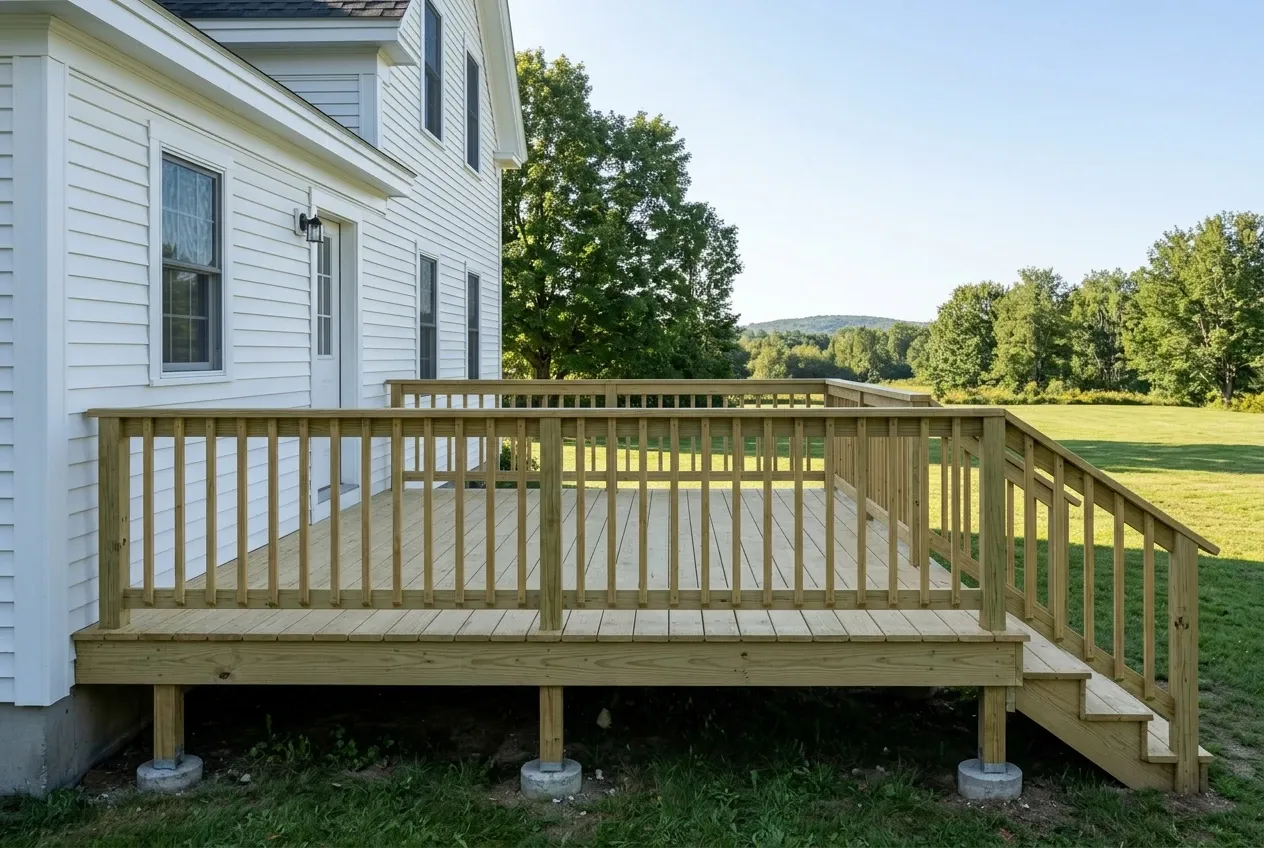
Pressure-treated decks fit the farmhouses and village houses away from the lake, where a deck off a kitchen ell has to be solid and fairly priced first. On China's form, a treated deck is described part by part: the joists and how far they span, the carrier they rest on, which we call the beam, and the support columns under it with their spacing.
We frame each of those heavier than the minimum and seat the beam in a notch cut into each post, so the posts carry the load rather than bolts alone. The Rural District caps all structures at 20 percent of a lot, which on a large farm parcel leaves room to spare.
Rebuilding an Old Deck on a China Shoreland Lot
Deck replacement on a China shoreland lot is priced by the town like an addition, since its fee sheet bills "Replacements - decks, rooms, sheds, etc." at the same rates. The Land Use Ordinance lets a non-conforming building be repaired without expansion, and any part of an expansion must stay no closer to the water than the building's closest point already is.
Steps and ramps up to 4 feet wide, with landings of no more than 16 square feet, do not count as expansion, which helps when the new deck needs a way down to the lawn. Under the old deck, we pull every post and joist, set new footings below the frost line and frame it again from scratch, so no new board ever lands on an old joist.
What Deck Services Do We Offer in China?
Three pieces of work cover most China decks.
China's code enforcement page says "You MUST obtain permits before starting a project," and Chapter 2, the Land Use Ordinance, calls for a permit before anyone expands a structure, listing attached decks as expansion. We bring your plans to the code office ahead of any digging, file the permit it asks for, and approving it is the town's call alone.
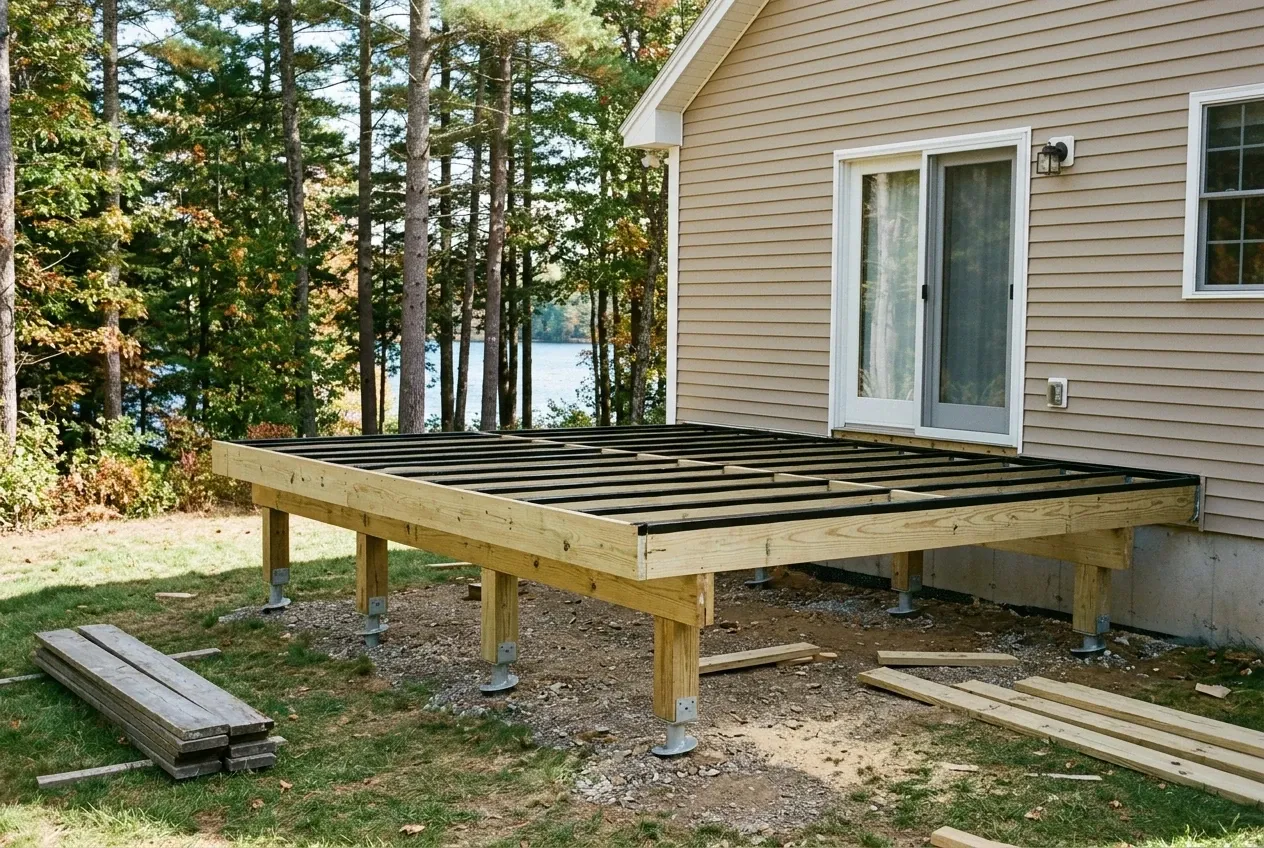
- Footings on piles, the beam notched in
- Guards and balusters to the town form
- Stairs and a small landing to the lawn
How to Get a China Deck Permitted, Built and Walked
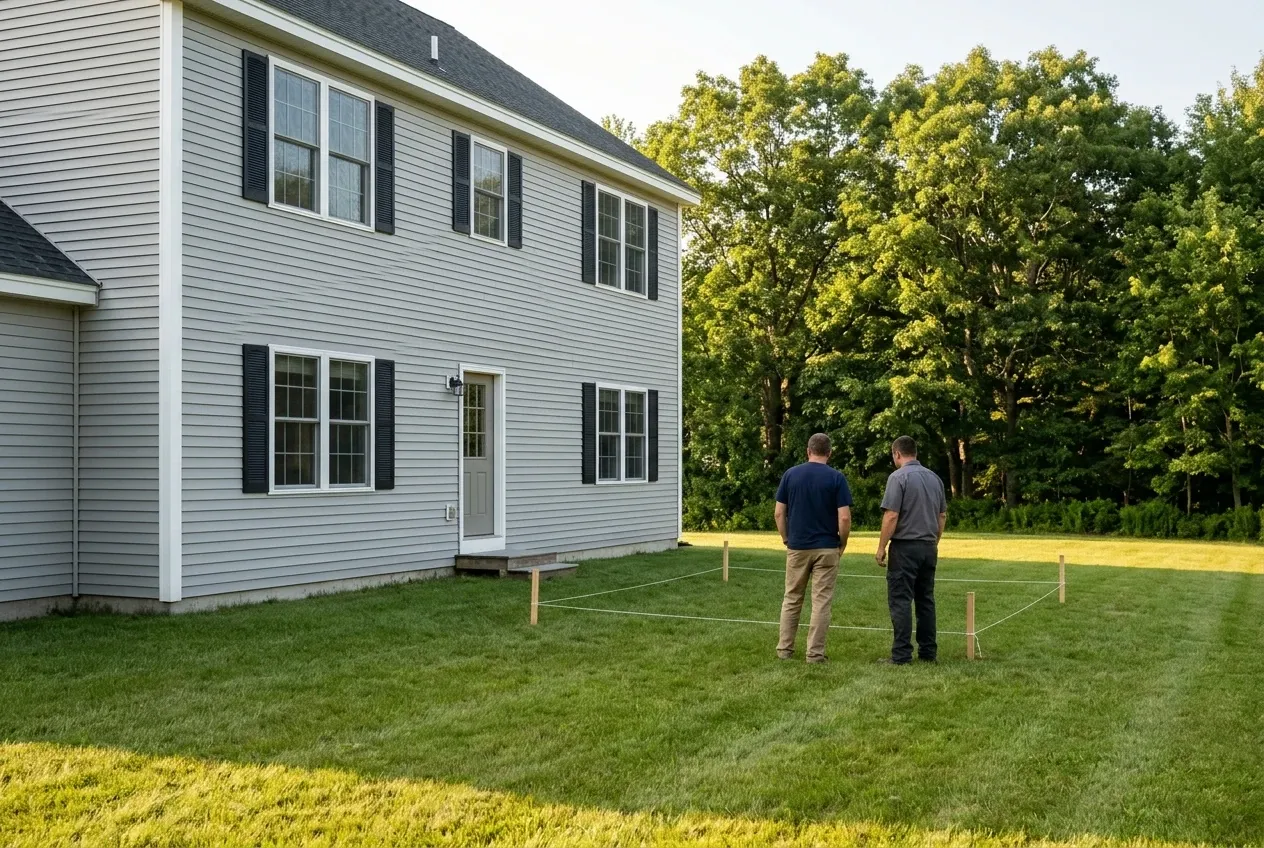
Look, measure, then draw.
We walk the lot, study the siding and the old deck if one is there, and measure the distances the town's plot plan wants, from each property line to the new deck.
A written price and contract.
The price lists the piles, the frame, the boards, the guard and the stairs one by one, and Maine's 10 MRSA §1487 puts any job past $3,000 under a written contract carrying both our names, with a third of the price, at most, due at signing. China's form also asks you to sign permission for the town to come onto the property during reasonable hours for inspections.
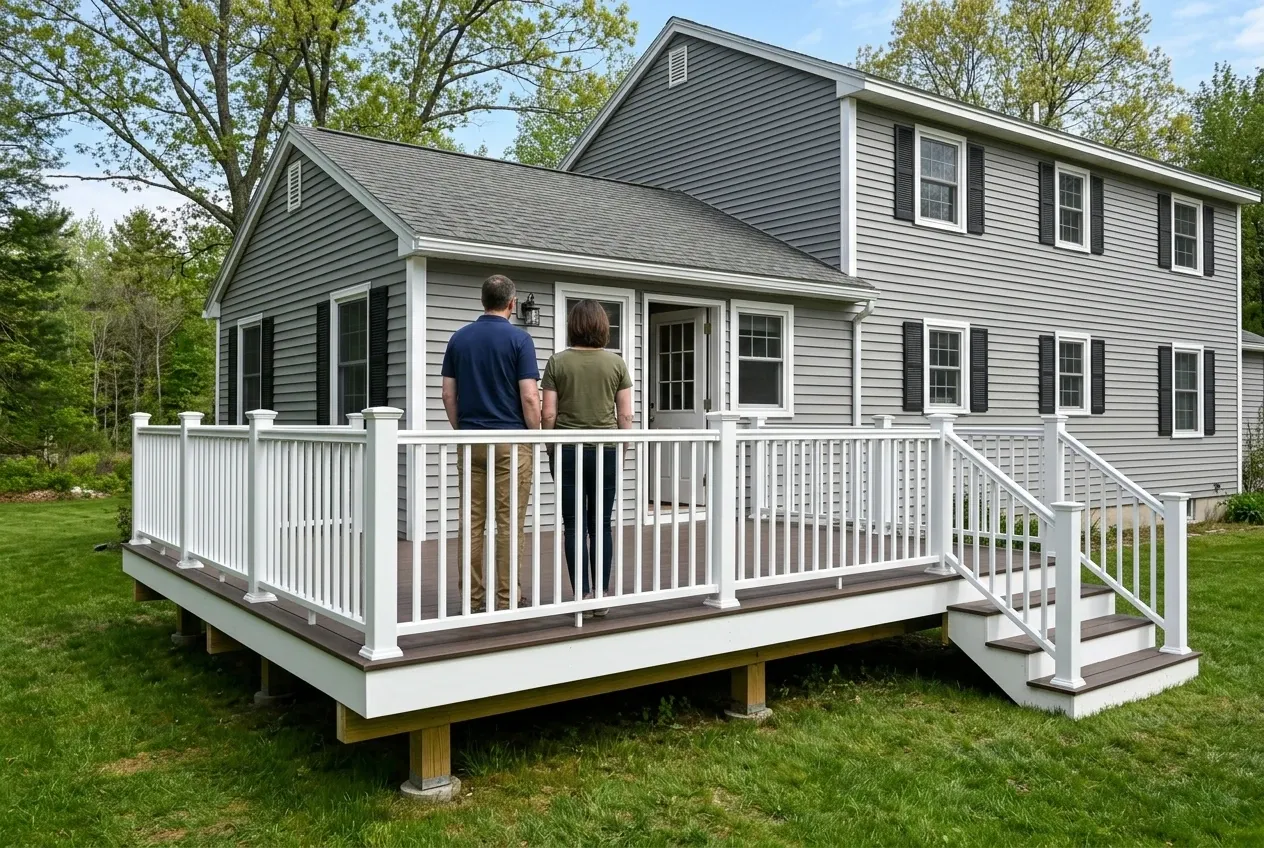
Frame, deck, rail, haul, walk.
Footings and framing come first, then boards, guards and stairs, and the old deck goes out with us. You and we walk the finished deck together before the job is called done.
What Should Deck Builders in China, ME Check First?
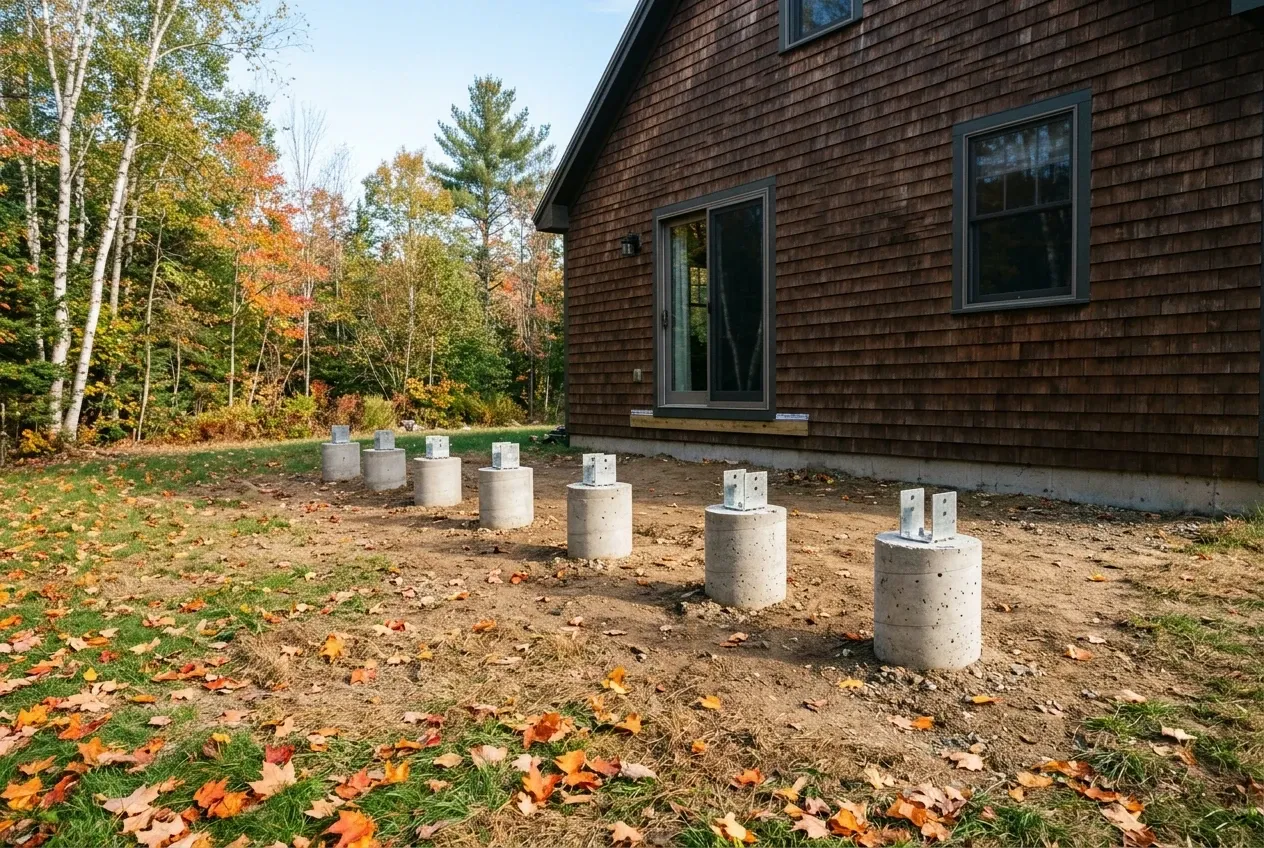
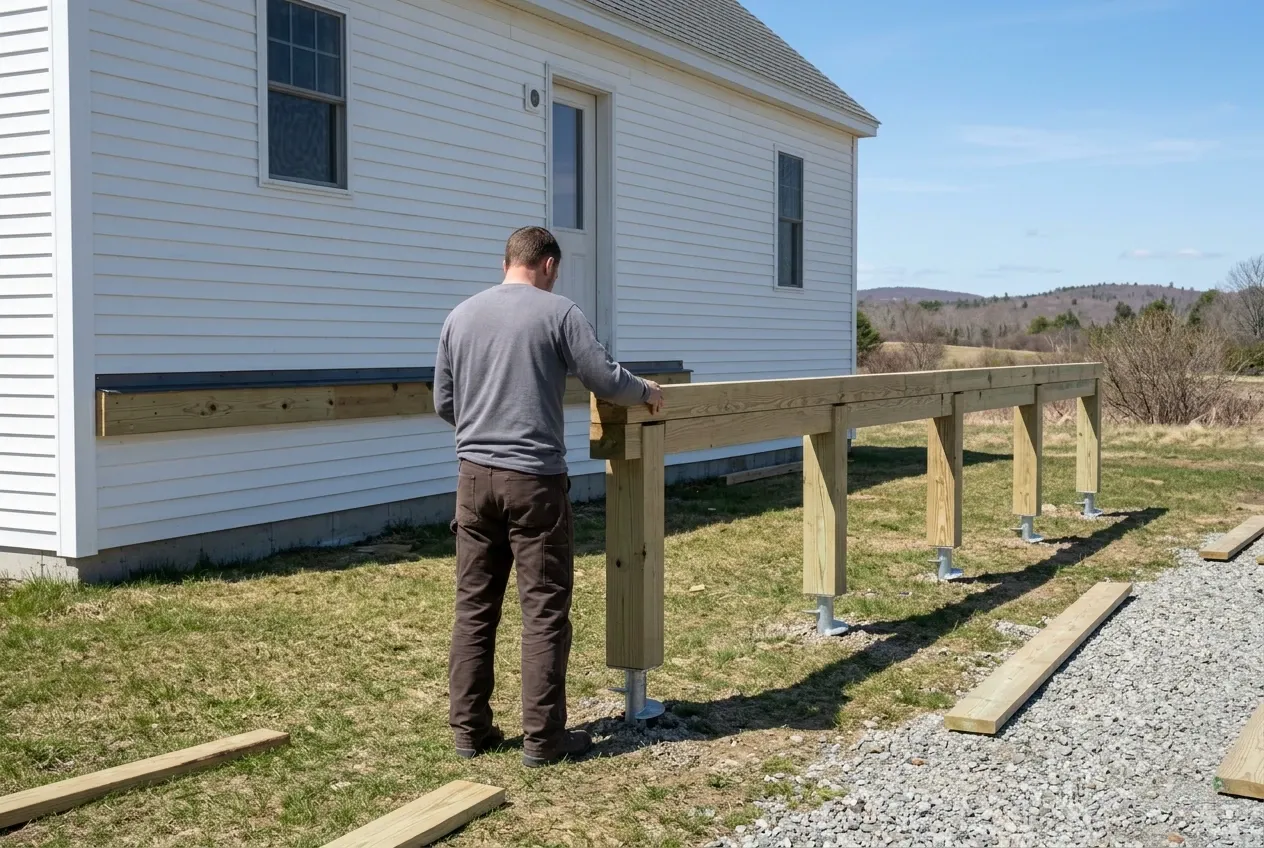
Deck builders in China, ME should check the ground before anything else, since the whole deck rests on its footings (the steel or concrete under each post), and any footing left shallower than the frost line, the depth reached by the winter freeze, gets pushed up. Our footings reach a 4-foot depth, and helical piles make up most of them (a steel shaft with a helix welded near its point, turned into the soil), with a poured concrete pier where it makes more sense.
The second check is the wall, where a ledger (a plank lagged to the house frame to hold the deck's near edge) goes on only with flashing above it. Where the rim of an old camp is too soft to hold bolts, we set a second beam on posts and build the deck freestanding.
The third check is the shore. China's Land Use Ordinance covers all land within 250 feet of its ponds, lakes and rivers, sets new structures 100 feet from great ponds classified GPA and 75 from other waters, and measures setbacks to a structure's closest overhang, so we check with the town before placing a deck near China Lake.
Who Approves a China Deck, Where Can It Sit and When?
Who approves a deck in China?
A deck in China is approved by the code officer in the Shoreland, Rural and Development districts, which is where the Table of Uses puts both houses and their accessory structures, and by the Planning Board in Resource Protection and Stream Protection. The ordinance has no deck line of its own, so we confirm the route for your lot.
Where can a deck sit on a China lot?
A deck can sit on a China lot no closer than 25 feet to the road property line, 10 feet to a side line and 15 feet to the rear line, in every district from Shoreland to Development. Inside the shoreland zone, structures may cover 15 percent of a lot and 20 percent counting other non-vegetated surfaces, against 20 percent in the Rural District and 40 percent in the Development District.
When does China decide on a deck permit?
China decides on a deck permit within 35 days of a complete application, under Section 6(B)(IV), and before that the code officer has 35 days to decide if an application is complete at all. Building first costs more, because the fee sheet applies an after-the-fact multiplier of 2.5 times.
How Much Does a China Deck Cost on Average?
A China deck costs, on average, about $82 per square foot in plain pressure-treated lumber, while layouts with more size or more turns average $103 to $123 per square foot, each figure an average of many quotes. Any complete treated deck carries a $10,000 floor, and composite or PVC with composite rail sets its floor at $15,000.
| Deck | What it usually means | Average |
|---|---|---|
| Pressure-treated, simple layout | one floor level, a few steps, treated boards and rail | about $82 per square foot, nothing new under $10,000 |
| Bigger or more complex layout | lake-side levels, angled corners, tie-ins, more stairs | $103 to $123 per square foot |
| Composite or PVC | composite or PVC boards with composite rail | from $15,000 |
China averages, installed and gathered from many quotes, meant for setting a budget rather than pricing your deck: they include piles, frame, boards, guard and stairs, and a deck set high, extra steps or decay hidden in an old frame can push them.
Why is a small China deck more per square foot?
A small China deck is more per square foot because its piles cost nearly what a larger deck's would, so a fixed cost rides on less floor. A 12x16 usually runs about $1,000 past a 10x10, which is why we price both sizes before you choose.
What decides where a China deck lands in the range?
A ramp decides where a China deck lands in the range before anything else, followed by the stair count, any footings already sound enough to use, the number of levels and tie-ins, and the height. Above roughly 2 feet off the ground, a day or so of staging gets added, and that day weighs on a small deck most.
What does a China replacement add over a new deck?
A China replacement adds the tear-out, carrying the old lumber away and a fresh set of footings to what a new deck costs. We look at the old posts during the visit before saying any can stay, and the written price lists what we decided.
Want the Decks Only Form Filled In for Your China Lot?
Request a free estimate, and we will measure your China lot, look over the house and any old deck, and give you a written price along with the numbers the town's deck questions call for.