
Deck Services in Waterville and Winslow
Composite and PVC decks, pressure-treated wood decks and full deck replacement for Waterville, Winslow and 20 more central Maine towns, each one priced only after we have checked the yard, the wall the deck meets and whatever deck stands there now.
- Decks only, footings to rail
- Free estimate requests
- 22 central Maine towns, Waterville to Skowhegan
Which of Our Three Deck Services Fits Your House?
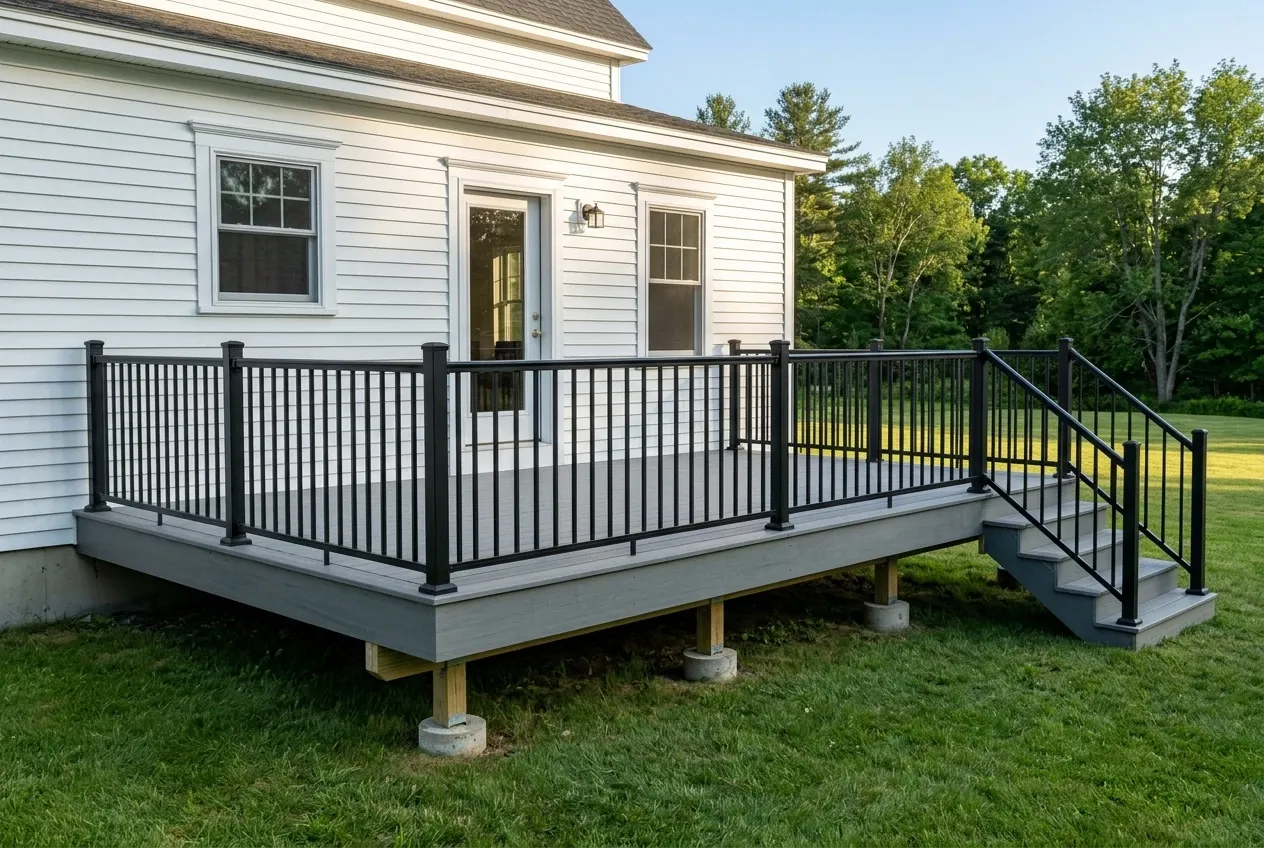 Composite DecksCapped composite or PVC boards on hidden clips over a treated frame, the joists 16 inches apart and 12 under PVC. With composite rail, a composite or PVC build begins at $15,000 on average.See Composite Decks
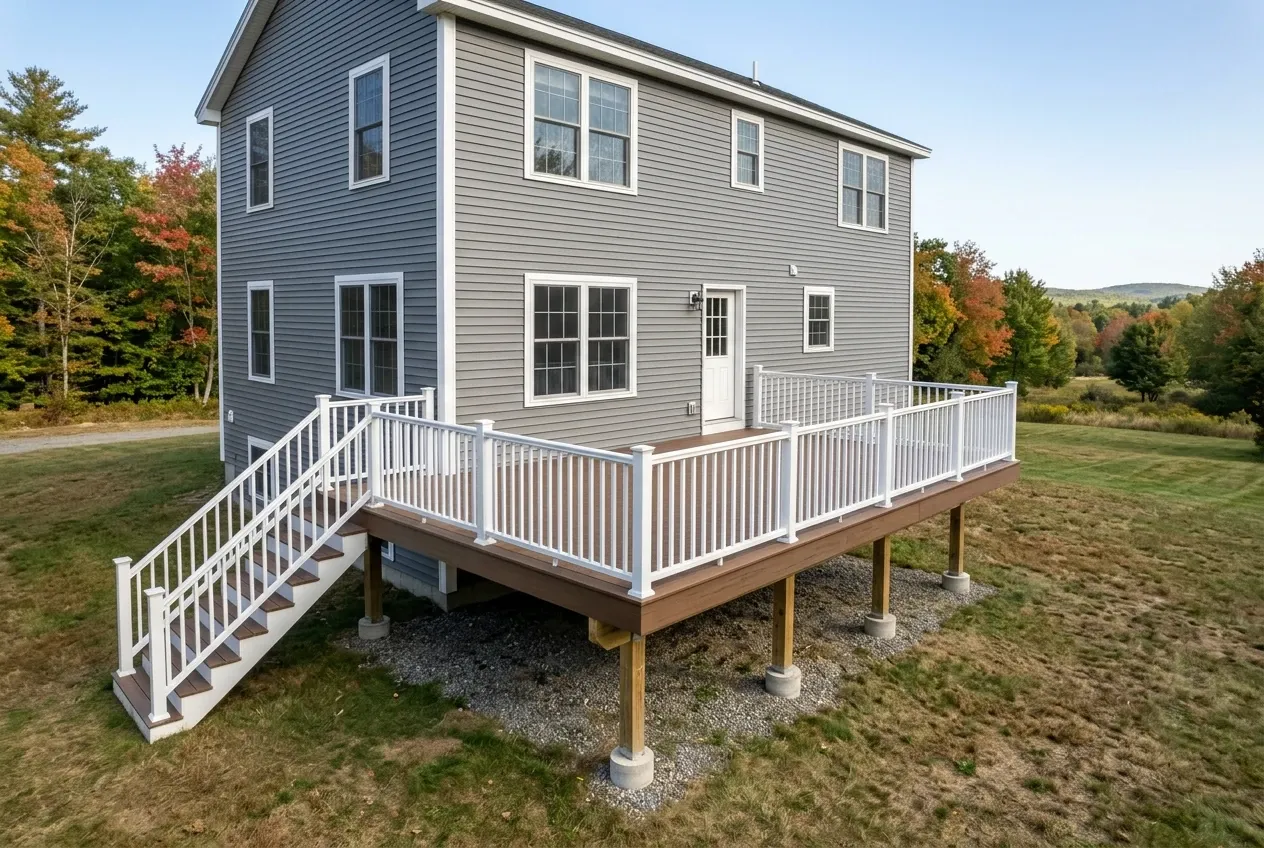 Deck ReplacementA worn-out deck comes off and leaves the property, then fresh footings, a fresh frame and fresh boards go in from the ground up. Larger or more involved layouts average out at $100 to $120 per square foot.See Deck Replacement
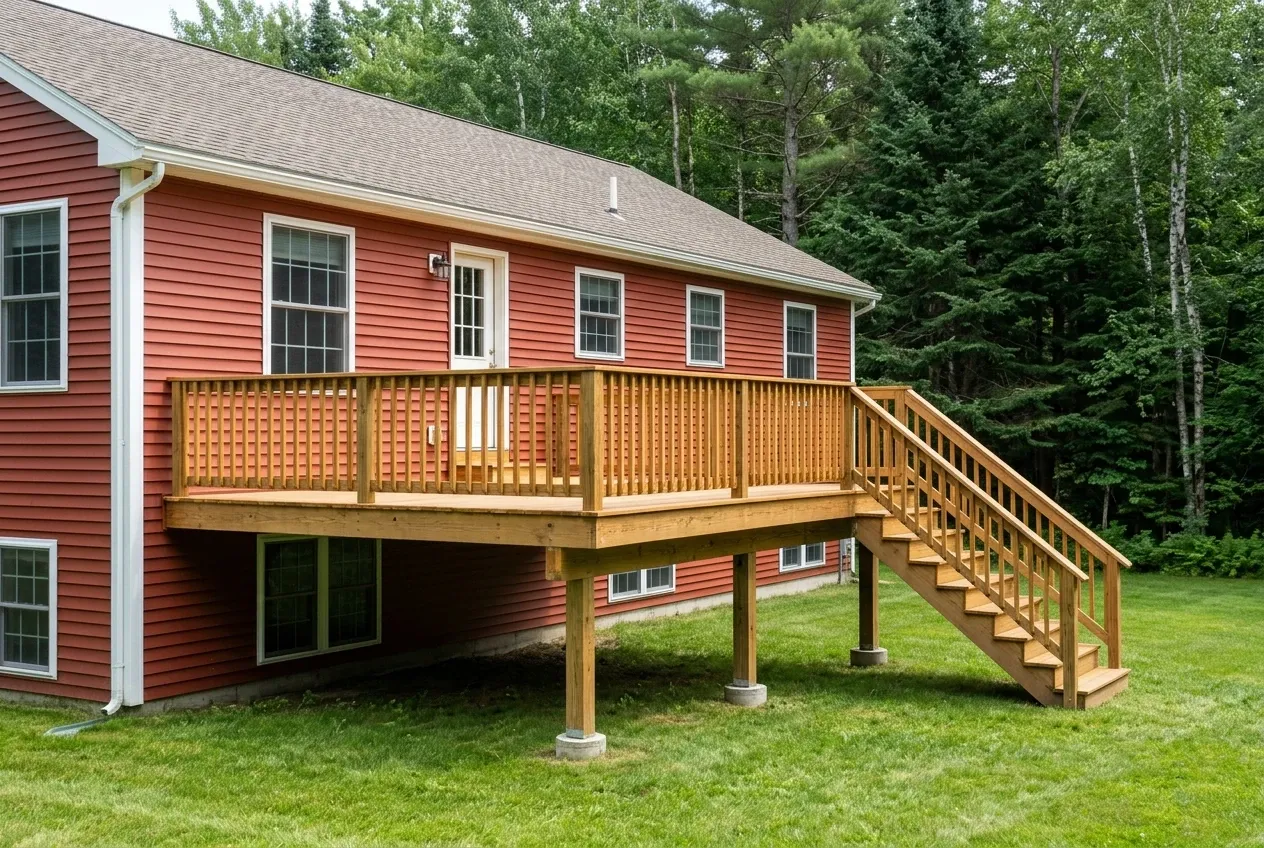 Pressure-Treated DecksTreated lumber from the posts to the rail, the least costly route to a sound deck. On average a plain one-level build comes to about $80 per square foot, and no full build comes in under $10,000.See Pressure-Treated Decks
Where do we build decks?
Waterville, Oakland and the towns around them, 22 in all, across Kennebec, Somerset and Waldo counties.
How Do We Choose Composite, PVC or Treated Wood With You?
We choose composite, PVC or treated wood with you by asking three things: how long you will keep the house, how much upkeep you want to do and where the deck sits. For most year-round houses from Waterville to Winslow our answer is composite boards on a treated frame, and treated wood is our answer for a tight budget or a deck you may rebuild bigger later.
Composite decks come in two board types, capped composite and PVC, and we handle them differently. Capped composite goes down on hidden clips over joists 16 inches apart, while PVC gets joists 12 inches apart and face screws with plugs, because PVC moves more with heat and cold.
Under either board, the frame is treated lumber built heavier than the minimum, with tape on the top of every joist. On a composite deck we trim the edges so no cut board end shows, which adds real cost and gives the deck a finished edge from every side.
Pressure-treated decks cost the least to build and ask for stain or sealer on a schedule, starting once the new boards have dried. Every post is ground-contact lumber, the rating for wood set in or near the soil.
Whatever the board, the price per square foot climbs as a deck shrinks, because a small deck needs nearly the same footings as a large one. That is worth knowing before you settle on a plan, since a size up often adds less than people expect.
Can an Old Deck Be Saved, or Must It Come Down?
An old deck can be saved only when its footings, its frame and its ledger all test sound, and we find that out at the visit with an awl, a level and a look under the boards. No price is written until we have seen what holds the deck up.
The signs we check are the ones owners mention first: a deck that feels bouncy or spongy, soft spots near the house, stairs that wobble, posts on blocks that heaved and a ledger pulling away from the wall. A wood deck about 20 years old that has been patched board by board is done, in our view, and we tell you so plainly.
When the trouble is small, such as one loose tread on a sound frame, we tell you at the visit if a repair will do the job. When the trouble runs deeper, deck replacement takes the deck down to the footings, with new ones 4 feet down, a new frame and a ledger flashed on a sound wall, or a freestanding frame where the wall cannot carry one.
New boards do not go onto an old frame on any deck we build. The frame is the smallest share of what a deck costs, and fresh boards screwed to tired joists would outlast what holds them up.
Still unsure which service your deck needs? Choose "A new deck", "Replace my old deck" or "Rebuild it bigger" on the estimate request, and our visit sorts out the rest.
Which Deck Job Is Waiting at Your House?
Tell us the town and whether a deck stands there now. We look at the yard and the house wall before anything else, then put the scope and the price in writing.